Nobel Prize in Chemistry 2018
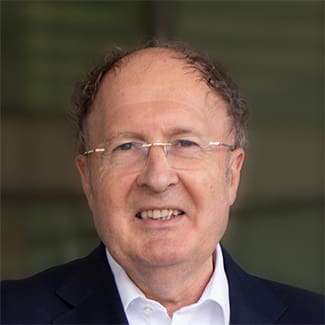
Greg Winter
For the phage display of peptides and antibodies
“People refer to the ‘LMB culture’ as one of the things that makes it special. It’s an attention to people who are willing to tackle very big problems – the kind of problem that you could devote your life to.”
Greg Winter
Using Evolution to Produce Antibodies
All antibodies share the same basic structures, with only small changes which make them specific for one target antigen. Previously, César Milstein and Georges Köhler shared the 1984 Nobel Prize in Physiology or Medicine for developing a method to isolate and reproduce individual, or monoclonal, antibodies. However, these monoclonal antibodies were produced in mice and thus had limited application in human medicine as they were rapidly inactivated by the human immune response. In the late 1980s, Greg Winter began working with Michael Neuberger at the LMB to explore solutions to this rejection problem.
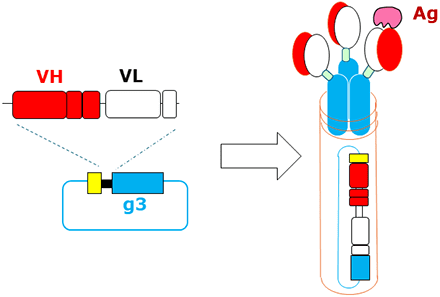
Greg’s success came with the creation of phage display, a technique that used bacteriophages, viruses that infect bacteria, to display fragments of antibodies in the form of peptides and proteins on their surface. Each bacteriophage carried a different genetic variant, allowing for the development of a large library of these antibody fragments. This library could then be screened for specific variants, allowing for the rapid identification and isolation of antibodies with desired properties.
After selecting the most promising candidates, the chosen antibodies went through further iterative rounds of mutation and reselection to refine their desirable properties. This evolution process meant Greg could produce antibodies with better binding affinity and specificity, which is crucial for therapeutic use.
This method, together with other recombinant technologies involving immunised mice, was crucial to the development of monoclonal antibodies as treatments for a wide variety of non-infectious diseases, including cancers, autoimmune disorders and infections. In 2003, HUMIRA® was the first fully human monoclonal antibody drug approved for use in patients, given to treat rheumatoid arthritis. Since then, monoclonal antibody technology use has grown dramatically, and it is now behind over 30% of all new treatments introduced and represents a multi-billion-pound industry.
Greg shared the Nobel Prize with Frances Arnold from the California Institute of Technology (Caltech), USA and George Smith from the University of Missouri, Columbia, USA.