Nobel Prize in Chemistry 1958
Fred Sanger
For his work on the structure of proteins, especially that of insulin
“In spite of the many difficulties and set-backs that one encounters, I’m sure that scientific research must be one of the most fascinating and exciting occupations.”
Fred Sanger
Protein Sequencing
Every function of a living cell depends on proteins. They are complex organic compounds that play a central role in the structure and functioning of living cells. They include the structural proteins found in muscle, enzymes that are catalysts for reactions like metabolism in the body and specialist molecules like haemoglobin. Proteins consist of molecules called amino acids, which are linked in long chains.
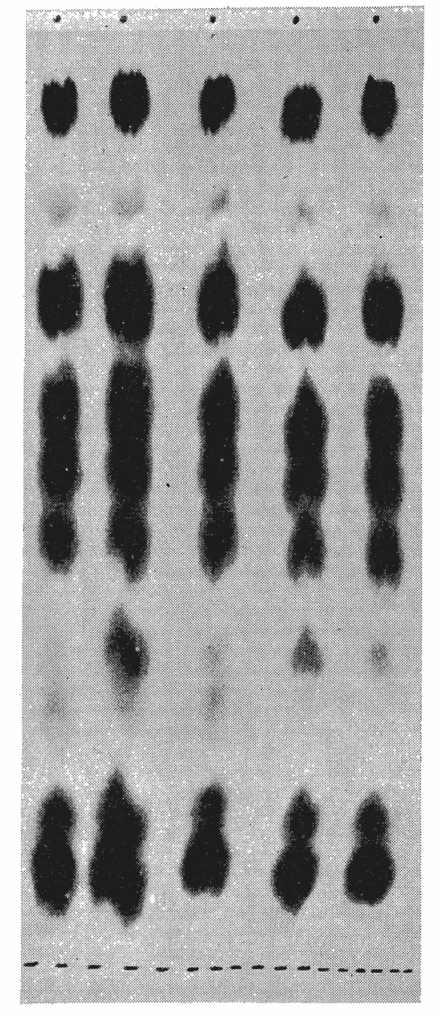
For the first of his two Nobel Prizes in chemistry, Fred Sanger determined the entire sequence of the 51 amino acids in the protein insulin and showed how they are linked together. Insulin is an important natural hormone that controls the level of glucose in the blood and is used to treat diabetes. Fred’s method involved separating the different fragments of the protein on filter paper and moving them with an electric current according to their electric charge. This created a distinct pattern on the paper, which Fred called a ‘fingerprint.’ The information about these fragments then had to be reconstructed in the correct order to give the sequence or ‘chemical structure.’
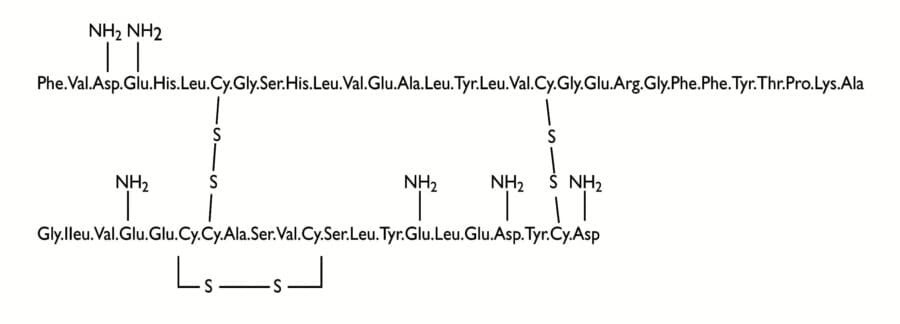
After 12 years of dedicated research, this was the first time the chemical structure of a protein had been deduced. It demonstrated that the sequence of amino acids in protein chains determines the individual and physiological properties of the protein. Fred’s methods have been applied to proteins in general to explore their role as key substances for life. Today, it is still necessary to use chemical means to determine protein sequences.