Nobel Prize in Physiology or Medicine 1962
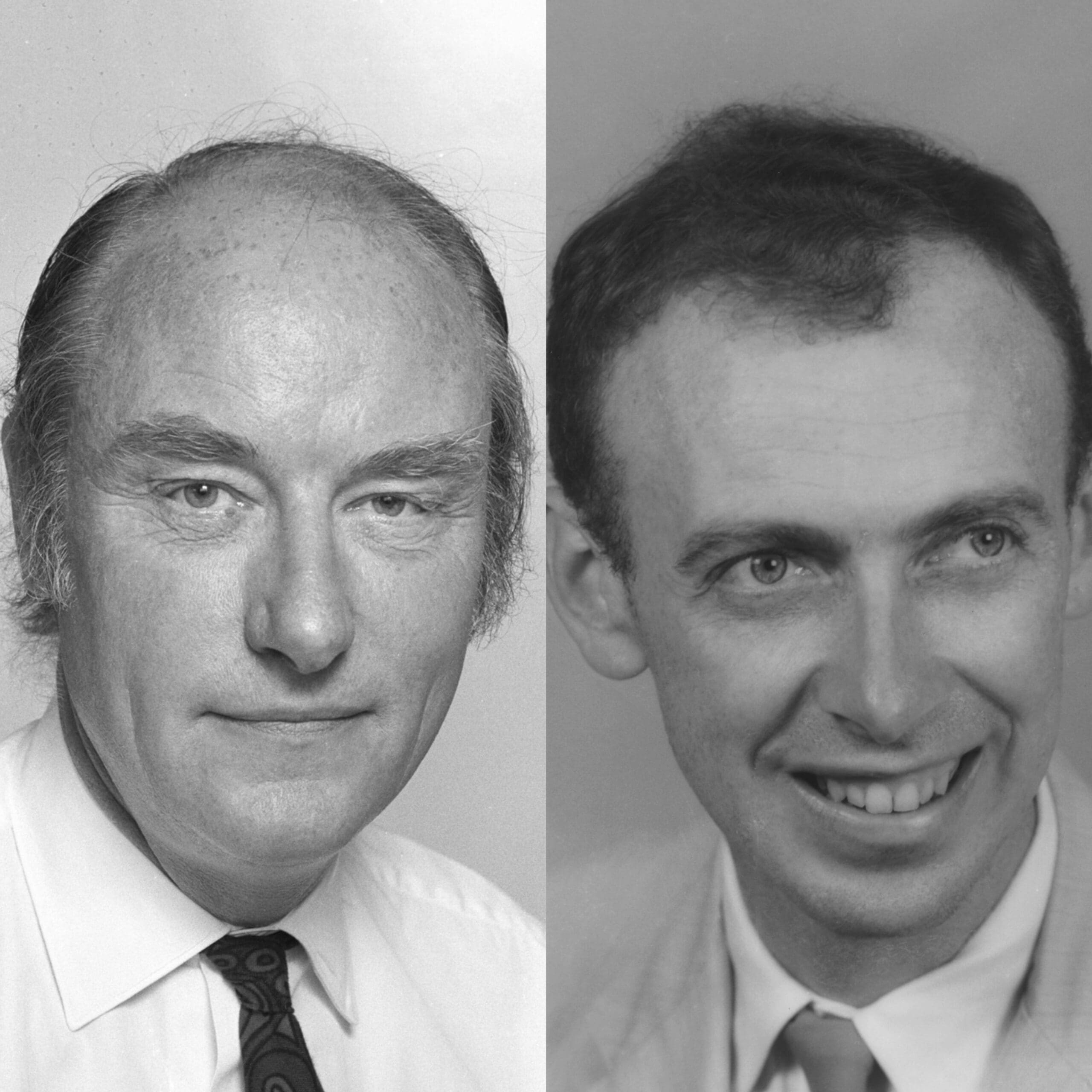
Francis Crick & James Watson
For their discoveries concerning the molecular structure of nucleic acids and its significance for information transfer in living material
“It’s so beautiful, you see, so beautiful!”
James Watson
The Structure of DNA
Deoxyribonucleic acid, or DNA, is the genetic material of organisms and is responsible for the transmission of hereditary characteristics like eye and hair colour. Many disabilities and illnesses, including some cancers, can also be linked to DNA. Determining the structure of DNA was the first step to understanding how these features are transferred from parents to their offspring.
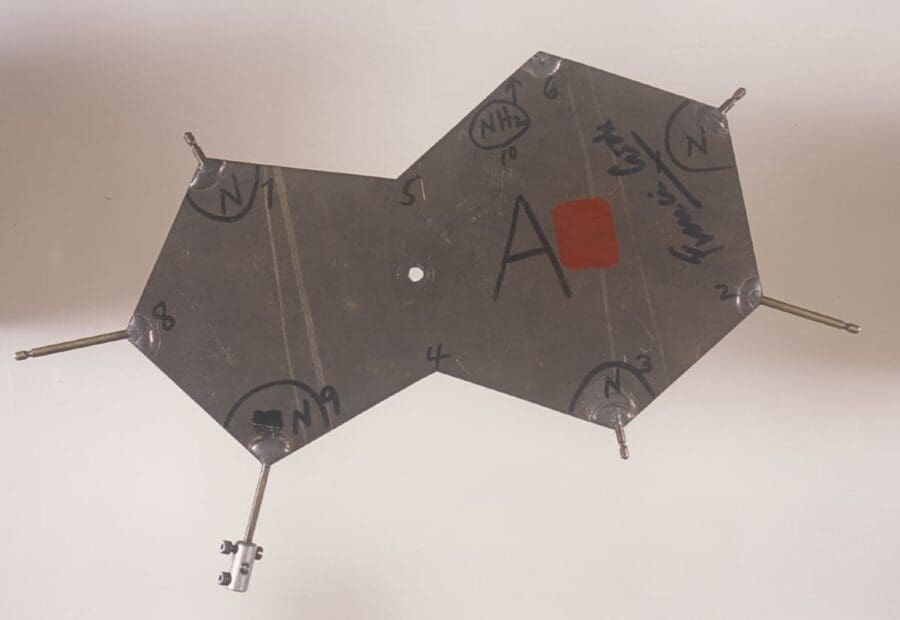
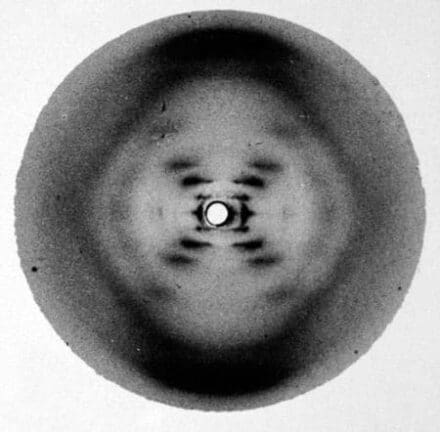
Francis and James were working on solving the structure of DNA in the MRC Unit for Research on the Molecular Structure of Biological Systems (now the LMB). Using experimental data, especially X-ray diffraction photographs from Rosalind Franklin and Maurice Wilkins at King’s College London, they began the process of model building.
They showed how the different components of DNA interact in three dimensions to form a long spiralling molecule, with a double ‘backbone’ of sugar and phosphates. Nitrogen-containing compounds, called bases, protrude from the two halves of the backbone and link together in specific pairs, so the whole molecule is like a zip. This is known as the double helix. The four types of bases form a sequence along the DNA, and this is the ‘genetic code’ that determines how the whole body develops.
The discovery immediately suggested how DNA is replicated: the two strands are ‘unzipped’ to allow the ‘code’ of bases to be copied. The unravelling of the helical structure of DNA is hailed as one of the most significant landmarks of the 20th century.
Scientists have built on this knowledge of DNA by applying it to issues of health and medicine, such as identifying ‘faulty’ genes, like the cystic fibrosis gene, and the BRCA1 and BRCA2 genes implicated in some breast cancers.
Francis and James shared the Nobel Prize with Maurice Wilkins.