Nobel Prize in Physiology or Medicine 1984
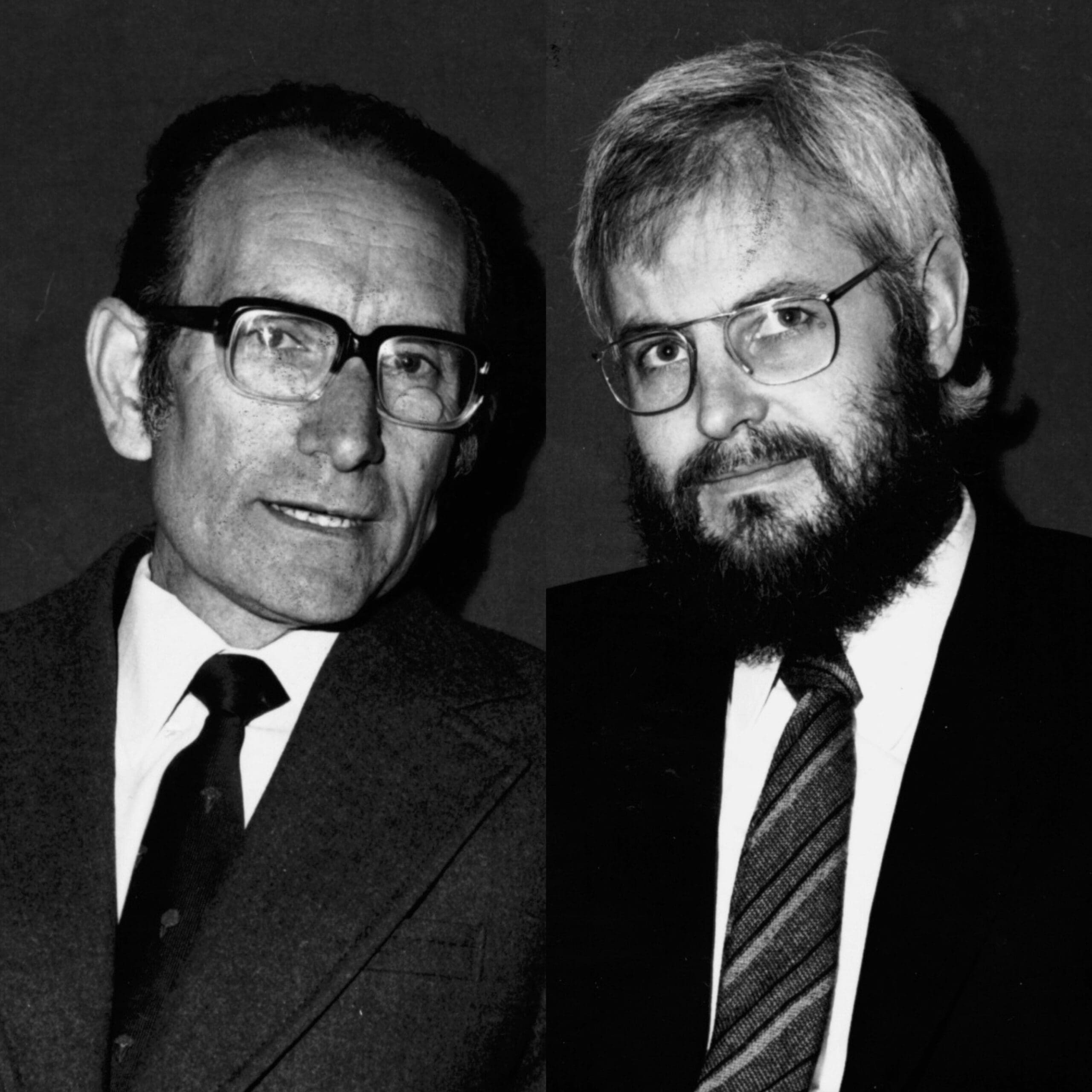
César Milstein & Georges Köhler
For theories concerning the specificity in control and development of the immune system and the discovery of the principle for production of monoclonal antibodies
“The development of a method to produce monoclonal antibodies against a defined antigen has had a profound impact in many branches of research and signalled a shift in the analysis of biological problems.”
César Milstein & George Köhler
Monoclonal Antibodies
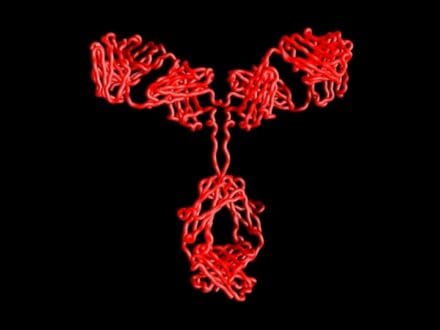
Antibodies are Y-shaped molecules with two flexible arms. The detailed shape of the ends of the arms varies from one molecule to another, providing a wide range of antigen-binding sites. The human immune system can produce more than two million different antibodies, each of which can recognise, bind to and destroy just one specific antigen. The ability of antibodies to bind specifically to substances is very useful in medical research, but it was difficult to produce large quantities of specific antibodies in the laboratory.
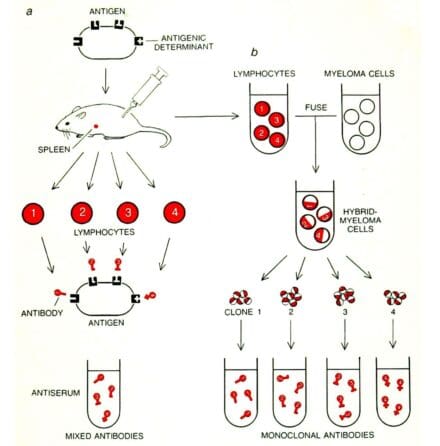
César Milstein and Georges Köhler were trying to understand the mechanisms responsible for the remarkable diversity of antibodies. Through this research, they invented a way to stimulate cells to provide unlimited production of a specific antibody – a monoclonal antibody. It was recognised that monoclonal antibodies had the potential to diagnose and treat a wide array of diseases, but it would take 20 years before this approach could be applied to humans, following research led by Greg Winter and Michael Neuberger at the LMB.
One of the most successful ways in which monoclonal antibodies have been used is in diagnostics – “tagging” a monoclonal with a fluorescent dye to see if it has attached to a specific antigen. This method can be used to diagnose cancers and AIDS. Monoclonal antibodies are now also used for therapies to treat diseases including rheumatoid arthritis, multiple sclerosis, some forms of cancer and viral infections. It has sparked an international multi-billion-pound biotechnology industry: monoclonal antibodies are the basis of a third of all biotech products in clinical development.
César and Georges shared the Nobel Prize with Niels Jerne from the Basel Institute, Switzerland.