Nobel Prize in Chemistry 2009
Venki Ramakrishnan
For studies of the structure and function of the ribosome
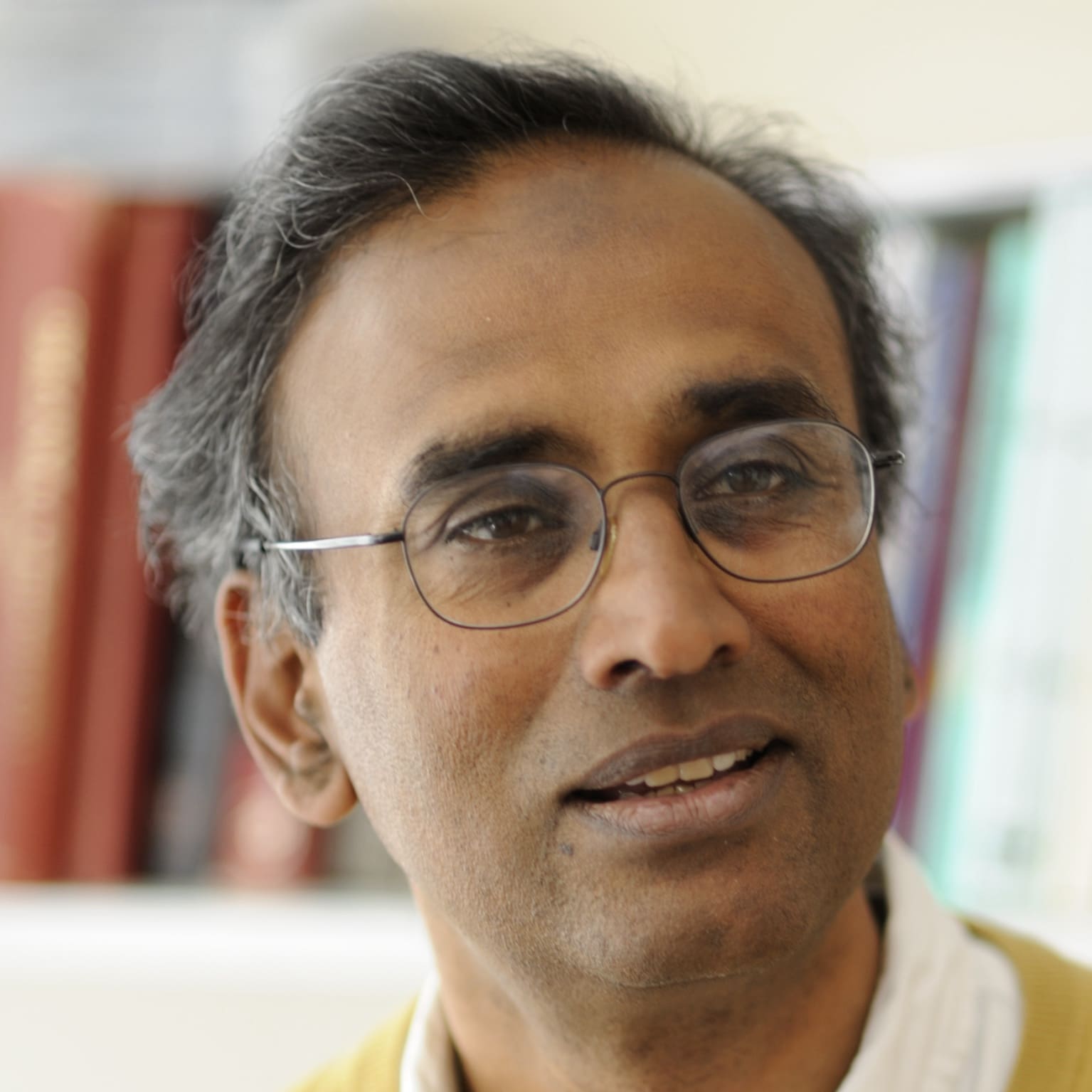
“Supporting long-term basic research like that at the LMB does lead to breakthroughs. The ribosome is already starting to show its medical importance.”
Venki Ramakrishnan
Understanding the Machinery of Life
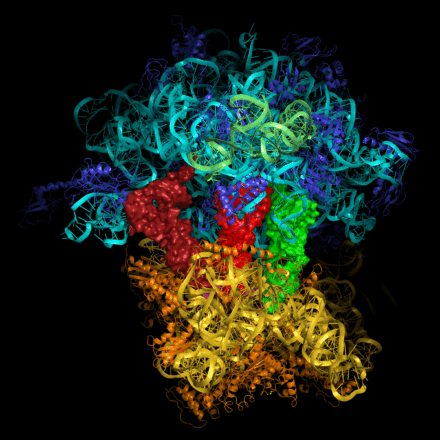
Each cell in every life form contains thousands of ribosomes, which are large molecular machines that make proteins. In one of life’s core processes, the ribosome translates the DNA code, producing the tens of thousands of different proteins that carry out a vast number of processes that allow a cell to live. Stretches of DNA carrying the genetic information to make proteins are copied to a temporary molecule called messenger RNA (mRNA). Ribosomes work along mRNA, reading the encoded information needed to produce specific proteins. For proteins to be generated at the speed and quantity required, a number of ribosomes work simultaneously along each mRNA strand. An understanding of how ribosomes work is crucial for a scientific understanding of life.
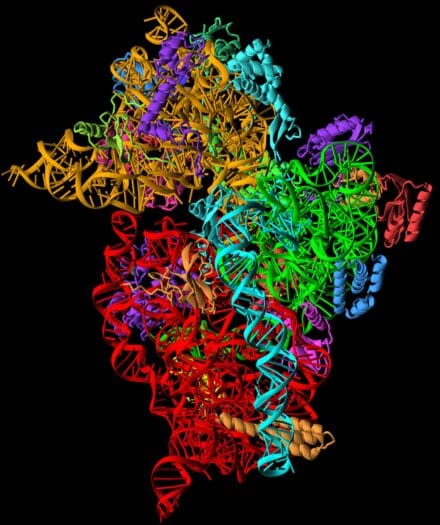
Venki Ramakrishnan started work on the structure of the bacterial ribosome at the University of Utah before moving to the LMB in 1999. Using X-ray crystallography, in 2000, his group determined the atomic structure of the 30S subunit, the part of the ribosome that reads the genetic code on mRNA. In 2006, they solved the atomic structure of the entire ribosome bound to mRNA and the transfer RNA molecules that bring in the amino acid building blocks of proteins to the ribosome. They also solved the structure of many antibiotics bound to the ribosome. This research shed light on many aspects of how the ribosome works, as well as how some antibiotics block its function.
This information is critical in developing new antibiotics to combat infection and disease. Many antibiotics work by using the small differences in their binding pocket between human and bacterial ribosomes. By preferentially binding to bacterial ribosomes, they prevent bacteria from making proteins, so that they cannot survive. The knowledge about ribosomes opens the possibilities of more medical advances and applications in the future.
Venki shared the Nobel Prize with Thomas Steitz from Yale University and Ada Yonath from the Weizmann Institute.