Differences in mTOR pathway activity flip the switch from nocturnality to diurnality and explain a major evolutionary change humans have undergone

Early mammals were nocturnal, sleeping during the day whilst large predators were active. However, after the extinction of dinosaurs, several different lineages of mammals transitioned independently to become active during the day. Exactly how this dramatic change occurred has proved elusive. A new study from John O’Neill’s group in the LMB’s Cell Biology Division has revealed a cellular switch which holds the answer.
Led by staff scientist Andrew Beale, the group studied how cells from a range of nocturnal (active at night) and diurnal (active in day) mammals, like humans, respond to environmental signals. Changes in temperature or osmolarity, as happens to the body throughout the day, caused the cells to respond in opposite ways, including in fundamental cellular functions like protein phosphorylation and protein synthesis. This divergence flips the timing of cellular activity, essentially acting as a day/night ‘switch’ at a molecular level.
The team pinpointed these differing responses to the mechanistic Target of Rapamycin (mTOR) and With-no-lysine (WNK) kinase pathways, central signalling networks in cells responsible for regulating several key functions including protein synthesis. This suggested that modification of their activity could enable nocturnal mammals to switch to more diurnal activity. To explore this hypothesis, the group administered diet-based treatments to mice to target the mTOR pathway, as mTOR activity is highly sensitive to nutrient levels. Once mTOR function was reduced, the mice began behaving more like diurnal animals, shifting their active hours into the daytime. This underlined that mTOR signalling goes beyond influencing metabolism, it also helps dictate when an animal is active.
Aided by Matthew Christmas, based at the Science for Life Laboratory at Uppsala University, Sweden, the group looked to contextualise this finding against the backdrop of mammalian evolution. After analysing genetic data across several species, Matthew found that genes regulating mTOR and WNK have evolved faster in diurnal mammals. This points to the importance these pathways have played in the shift from nighttime to daytime over millennia.
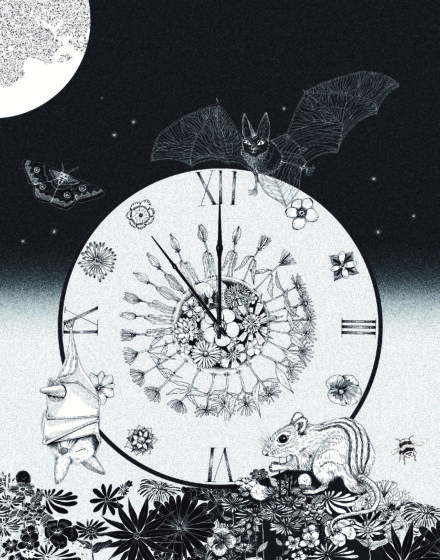
This discovery sheds new light on one of the most important evolutionary events in mammalian history and provides a piece of the puzzle for understanding human health. To date, most explorations of pre-clinical biomedical research has depended on the mouse model, yet this study highlights that nocturnal rodents differ from humans in key cellular pathways linked to timing and metabolism. This study also carries clear implications for circadian medicine, a growing field that examines how the timing of treatments influences their effectiveness.
Finally, it is interesting to note that several of the key external factors harnessed in this study to influence animals’ circadian rhythms are vulnerable to environmental changes. As climate change disrupts temperature levels and food production capabilities, this work suggests mammals may change the time of day they are active in response. This will disrupt the fragile balance of relationships in our ecosystems and is an impact of climate change which has perhaps been overlooked thus far.
This work was funded by UKRI MRC, UKRI Future Leaders Fellowship, the Wellcome Trust and the Royal Society.
The project was further supported by Blue Sky collaboration between AstraZeneca UK Limited and the Medical Research Council (BSF38).
Further references
Related articles
Cellular switch casts light on why humans are active in the day – UKRI Press Release
Dual biological clocks discovered in intertidal crustaceans
Clinical study reveals striking daily temperature variation in the human brain that predicts survival after brain injury
How cellular clocks within heart cells coordinate daily cardiac rhythms
Animal research statement
As a publicly funded research institute, the LMB is committed to engagement and transparency in all aspects of its research. This research used mice, in accordance with the UK Animals (Scientific Procedures) Act 1986. This work was conducted under a Project Licence, reviewed and approved by the MRC Laboratory of Molecular Biology (LMB) Animal Welfare and Ethical Review Body (AWERB) committee and the UK Home Office.
The LMB uses the minimum number of rodents necessary to achieve results and only uses animals in research where there are no suitable alternatives, in line with the 3R’s (replace, reduce, refine). We currently work with fruit flies, nematode worms, mice, rats and zebrafish.