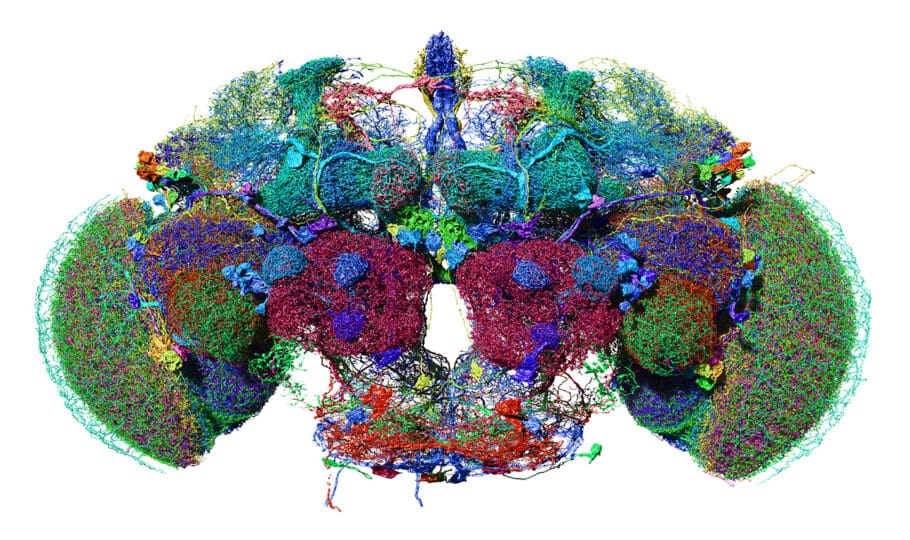
3D colour-coded reconstruction of a fruit fly brain connectome, detailing intricate neuronal networks across distinct regions.

Discovering
how life works
This 3D rendering shows the neural connections in a fruit fly brain, which is less than 1 mm across. Read more about the rendering, Greg Jefferis’s group and the FlyWire Consortium.
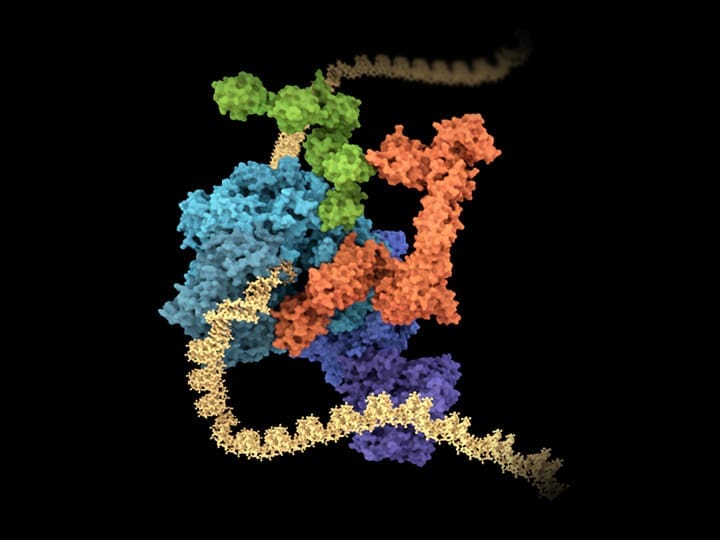
Molecular model of a replisome, a multi-protein complex (colored blobs) actively replicating a DNA double helix (yellow strand).

Research that spans the breadth of biology

The MRC Laboratory of Molecular Biology (LMB) is a research institute dedicated to the understanding of fundamental biological processes at the levels of atoms, molecules, cells and organisms. The knowledge we provide is crucial to solving key problems in human health.

A 3D image of the human replisome, the molecular machinery that copies our DNA, captured using electron cryomicroscopy. Discover more about the research exploring how these complexes work.

Latest News

Three women sit at a table smiling and gesturing during a discussion, with one woman's back to the viewer and notebooks on the table.

An unsurpassed environment for researchers

The LMB comprises over 50 scientific groups pursuing ambitious research, supported by cutting-edge scientific facilities and generous core-funding by the MRC/UKRI. We occupy an inspiring, purpose-built building on the thriving Cambridge Biomedical Campus.
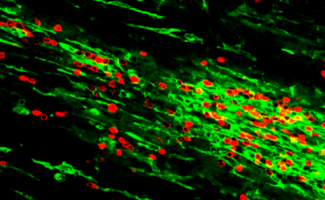
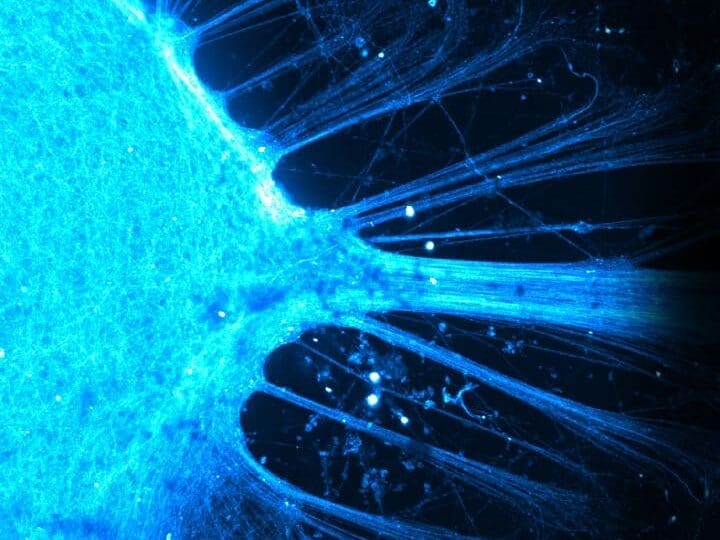
Fluorescent micrograph of a neuronal cell body with numerous radiating filamentous processes.

Progressing science for over 60 years

Since our origins in 1947, the LMB has pioneered the molecular biology revolution and is a world-leading source of new ideas, scientific advances and technology. Our discoveries have led to highly successful commercialisations and medical advances that have improved human life.

An axon bundle growing from a human brain organoid within a micropatterned device. Read more about research into axon growth and human brain development

Latest Publications

Distinct TAF15 amyloid filament folds define multiple subtypes of FTLD‑TAF15. (12th Jan 2026)Tetter S, Varghese NR, Murzin AG, De Coster W, Van den Broeck M, Roeber S, Joseph JT, Newell K, Castellani R, Das S, Ang LC, Synofzik M, Herms J, Rademakers R, Ghetti B, Lashley T, Mackenzie IRA, Neumann M, Ryskeldi-Falcon BbioRxiv • doi: 10.64898/2026.01.12.698957
Multi-omic analysis of guided and unguided forebrain organoids reveals differences in cellular composition and metabolic profiles. (4th Feb 2026)Øhlenschlæger MS, Jensen P, Havelund JF, Schmidt SI, Mohamed FA, Sutcliffe M, Elmkvist SB, Criscuolo L, Wingett SW, Chiaradia I, Bayram E, Nicolaisen JAA, Jakobsen LA, Brewer J, Benros ME, Freude K, Færgeman NJ, Lancaster MA, Larsen MR, Bogetofte HCell Rep Methods • 101295 • doi: 10.1016/j.crmeth.2025.101295
An NSP2-MYB module orchestrates flavonoid biosynthesis and nodule symbiosis. (4th Feb 2026)Gao JP, Xia C, Chiu CH, Chen Q, Jiang S, Wu X, Liang W, Sun J, Jhu MY, Wen J, Wang E, Murray JD, Oldroyd GEDCurr Biol • doi: 10.1016/j.cub.2026.01.013
Organizers in a dish: Modeling human CNS morphogenesis. (4th Feb 2026)Miller G, Lloyd-Davies Sánchez DJ, González Martínez J, Justin AW, Lancaster MA, Guglielmi LDev Cell • doi: 10.1016/j.devcel.2026.01.003
The host protein cyclophilin A restricts nuclear entry of HIV-1 mutants by reducing the elasticity of the viral capsid.Hong J, Deshpande A, Thakare Y, Simonovsky L, Douglas AW, Guinness CM, Rotem-Dai N, Kortyna ML, Klarhof JO, Shi J, James LC, Boecking T, Francis AC, Rousso I, Aiken CPLoS Pathog • 22(1):e1013910 • doi: 10.1371/journal.ppat.1013910
Crystal structure of a tRNA acceptor-stem mimic at 1.94 Å resolution. (1st Feb 2026)Liu Z, Bellini D, Gorrec F, Wagner A, El Omari K, Sutherland JDActa Crystallogr F Struct Biol Commun • 82(Pt 2):57-65 • doi: 10.1107/S2053230X26000658
How human-derived brain organoids are built differently from brain organoids derived from genetically-close relatives: a multi-scale hypothesis. (26th Jan 2026)Zhang T, Gupta S, Lancaster MA, Schwarz JMSoft Matter • doi: 10.1039/d5sm01116g
Molecular architecture and diversity of StopGo/2A translational recoding. (27th Jan 2026)Li X, Zuber PK, Loughran G, Bhatt PR, Alquraish F, Ramakrishnan V, Firth AE, Atkins JFProc Natl Acad Sci U S A • 123(4):e2528667123 • doi: 10.1073/pnas.2528667123