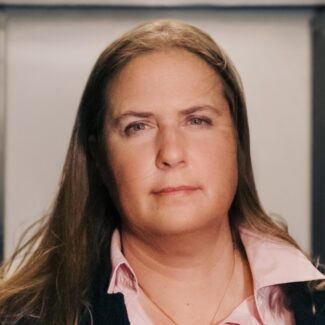
Sarah Teichmann completed her BA at Trinity College, Cambridge in 1996, and her PhD in 1999 at the LMB with Cyrus Chothia. Her PhD work was at the forefront of the burgeoning field of bioinformatics. It focussed on the prediction of protein 3D structures through comparisons with newly sequenced bacterial genomes using hidden Markov models, a powerful class of machine learning methods that were then being adopted across diverse areas of science. She was awarded the Max Perutz PhD Student Prize and a Trinity College Junior Research Fellowship (Title A) for this work.
After completing her PhD, Sarah undertook a postdoctoral position with Janet Thornton at University College London through a Beit Memorial Fellowship. There, she applied graph theory to represent biological systems as networks, using newly available whole-genome sequences to investigate the evolution of protein interaction and metabolic networks.
Returning to the LMB in 2001, Sarah established her independent research group, focussing on protein domains, the evolutionary building blocks of proteins. Her research combined molecular and systems-level perspectives to understand how domains interact physically within and between proteins and how this impacts cellular networks. Together with her first graduate student, M. Madan Babu, she used graph theory to reveal how gene duplication contributed to the evolution of transcription regulatory networks.
Crucial to her group’s success was harnessing a multidisciplinary approach. Sarah championed the integration of theoretical and computational research with wet-lab biochemical work, using experiments to test and refine hypotheses generated by computational analyses. With Carol Robinson, she published influential work elucidating the evolution and assembly pathways of protein complexes, including the demonstration that assembly pathways bear the imprint of their evolutionary history.
Sarah’s group, together with those of Cyrus Chothia and later M. Madan Babu, formed the Theoretical and Computational Biology (TCB) Unit, informally known as the Teichmann-Chothia-Babu supergroup. This became a focal point for computational biology at the LMB, uniting theoretical, computational and biochemical approaches to address fundamental biological questions. Their extensive collaborations influenced a broad spectrum of research, helping affirm computational biology as integral to modern biomedical discovery.
In 2013, Sarah took up the first joint appointment between the EMBL-European Bioinformatics Institute and the Wellcome Sanger Institute to co-found the Sanger-EBI Single Cell Genomics Centre. The joint appointment enabled her to integrate computational and experimental research and pioneer single-cell genomics approaches in mammalian immune cells, while expanding the scope of her wet-lab investigations.
With Aviv Regev, she co-founded and co-led the Human Cell Atlas project, which aims to generate reference maps for all cell types across human tissues. Since its launch in 2016, the consortium has amassed over 4,000 members across more than 100 countries and has generated over 475 publications, providing an invaluable resource to study development, health and disease. The consortium continues to develop, recently releasing reference data objects for 18 major organs and systems.
In 2016, Sarah was appointed Head of Cellular Genetics at the Wellcome Sanger Institute. Her group focussed on building cell atlases of the immune system and, together with collaborators, produced the first single-cell atlas of an entire human organ, spanning all tissues and cellular compartments of the placenta. Her group has also led efforts to atlas the thymus at single-cell resolution, enabling its reconstruction in three dimensions and to generate multimodal maps of the human heart.
Since 2023, Sarah co-directs the Canadian Institute for Advanced Research (CIFAR) MacMillan Multiscale Human research programme, conceptualising how the Human Cell Atlas connects to other biomedical data. Ultimately, this will create a multiscale map and model of the human body, linking molecules and molecular mechanisms to human physiology, disease and clinical outcomes.
In 2024, Sarah moved her academic research group to the Cambridge Stem Cell Institute at the University of Cambridge and assumed the role of Professor and Chair in Stem Cell Medicine. In parallel, she works part-time as VP Translation at GSK, leading a translation unit and establishing a Precision Medicine Lab in the GSK Clinical Trials Unit at the University of Cambridge. She has co-founded two drug discovery biotech companies, TransitionBio and Ensocell Therapeutics, and is a non-executive director of NASDAQ-traded company 10x Genomics.
In addition to her scientific discoveries, Sarah places great emphasis on mentorship and improving research culture. As one of the few women Group Leaders at the LMB in the early 2000s, she worked with Ana Pombo (then at the MRC Clinical Sciences Centre) to advocate for improved parental leave policies within the Medical Research Council. Throughout her career, she has mentored over 100 PhD students, postdocs and visitors, with many progressing to faculty, postdoctoral and industry roles worldwide. Her efforts have been recognised as components of awards such as the FEBS | EMBO Women in Science Award (2023) and the L’Oréal-UNESCO For Women in Science Award (2026). Sarah is a member of EMBO, an ISCB Fellow, a Fellow of the Academy of Medical Sciences and the Royal Society, a member of the National Academy of Medicine (USA) and the Leopoldina (German National Academy of Sciences), an International Honorary Member of the American Academy of Arts and Sciences and the 2024 Raman Lecturer of the Indian Academy of Sciences. Her contributions to research have been recognised by several awards, including the EMBO Gold Medal, the Royal Society Crick Lecture, the Gabor Medal, the Lister Prize and the Biochemical Society Colworth Medal.