
Contact
Facilities
Mass Spectrometry
The Mass Spectrometry facility supports three main areas of mass spectrometry: quantitative proteomics, structural proteomics and intact mass determination.
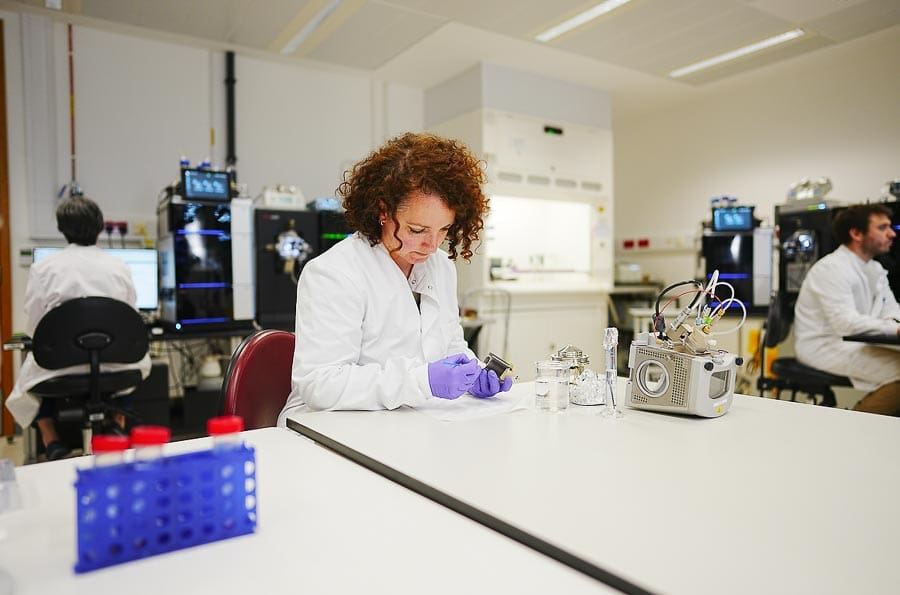
Quantitative proteomics uses mass spectrometry to identify and quantify proteins in highly complex samples such as tissues and cells. The set of proteins in a cell together with their modifications and interactions, provides a rich assessment of cell function at any given time. By tracking the proteome of living systems under various conditions, LMB researchers gain insights into how cells and organisms respond to physiologic perturbations, stress, disease progression, drug treatments and much more.
Quantitative proteomic pipelines in the facility include a Thermo Orbitrap Eclipse, a Thermo Orbitrap QExactive Classic and a Thermo Orbitrap QExactive Plus.
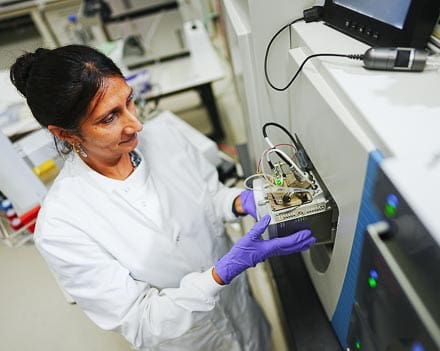
Structural proteomics uses hydrogen-deuterium exchange mass spectrometry (HDX-MS) and protein crosslinking mass spectrometry (CL-MS) to study protein structures and interactions. This work is supported by a Thermo Orbitrap Ascend, a Thermo Orbitrap QExactive HFx with a Waters HDX manager and a custom-designed UV cross-linking workstation.
Intact mass determination using Thermo Orbitrap Exploris MX and a Bruker MALDI-TOF/TOF helps users to validate many of their synthetic or protein purification projects by ensuring their proteins have the expected post-translational modifications or providing a quick intact mass assessment of their native complexes.