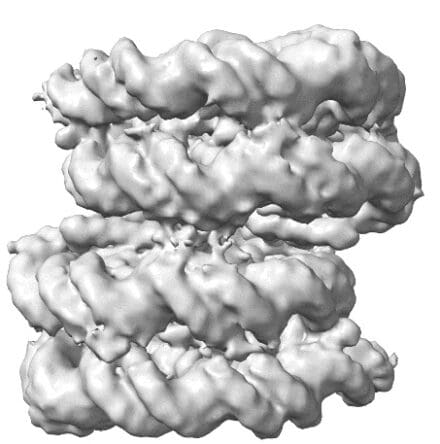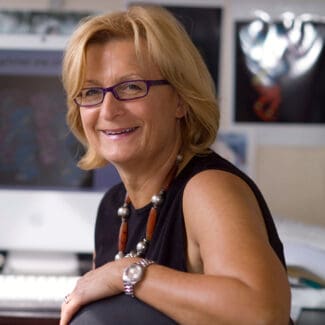
Internationally recognised for my contributions to the area of chromosome biology, I have provided fundamental insights into the packaging of DNA in chromosomes, the structure and function of telomeres and how specific proteins, such as transcription factors, recognise specific DNA sequences to regulate transcription. My research has determined a number of important structures of protein-DNA complexes involved in transcriptional regulation, such as zinc fingers and nuclear hormone receptors. Key contributions have been made to the understanding of the structure, function and regulation of chromatin compaction and remodelling including the role of histone modification (epigenetics). Our pioneering studies on telomere structure led to the discovery of the regulatory role of DNA-quadruplexes in biological processes by finding the first proteins that bind to such structure and their presence and regulation in vivo, thus opening up a new research area. X-ray crystallography and electron microscopy, combined with innovative biochemical analyses, epitomise my approach to structural biology.
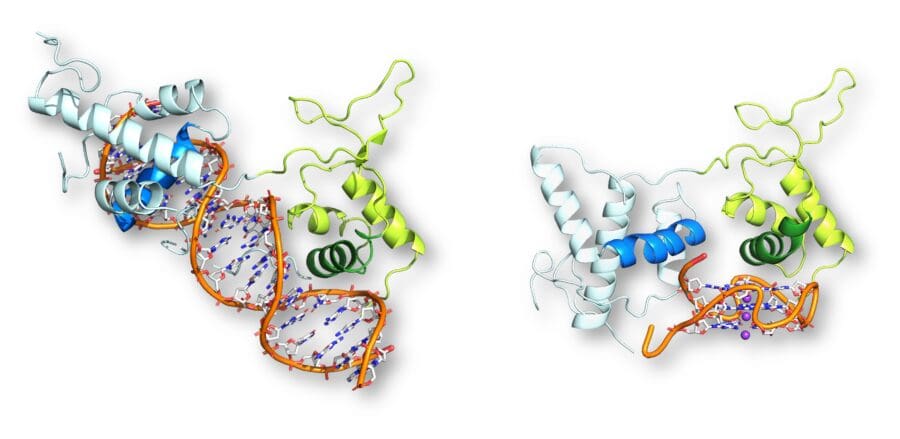
I first joined the LMB in 1969, initially hired as a research assistant by Aaron Klug. I went on to do a PhD with Klug as supervisor, and in 1987 was promoted to Group Leader. I joined the School of Biological Sciences at Nanyang Technological University (NTU) in Singapore as a Professor in 2011 and went on to become the founding director of the NTU Institute of Structural Biology. Since 2012, I have been an Emeritus scientist at the LMB.
I received the 2011 Ponte d’Oro Prize of my birthplace in Italy, and a minor planet, ‘80008DanielaRhodes’, was named in my honour. I was elected a member of EMBO in 1996, a Fellow of the Royal Society in 2007 and to the Academia Europaea in 2011. Alongside Karolin Luger and Tim Richmond, in 2023 I was awarded the WLA Prize in Life Science or Medicine for “elucidating the structure of the nucleosome at the atomic level, providing the basis for understanding chromatin, gene regulation, and epigenetics”.