Jan Löwe
Prokaryotic cytoskeletons and other molecular machines

We aim to understand molecular machines at the atomic level while answering important questions relating to cell biology. Filaments are ancient molecular machines that enable molecules to access length scales of microns, the size of cells.
Our main areas of research are the cytoskeletons of archaea and bacteria. We were involved in the discovery that these prokaryotes contain both actin and tubulin-like proteins that polymerise into filaments similar to their counterparts in eukaryotes.
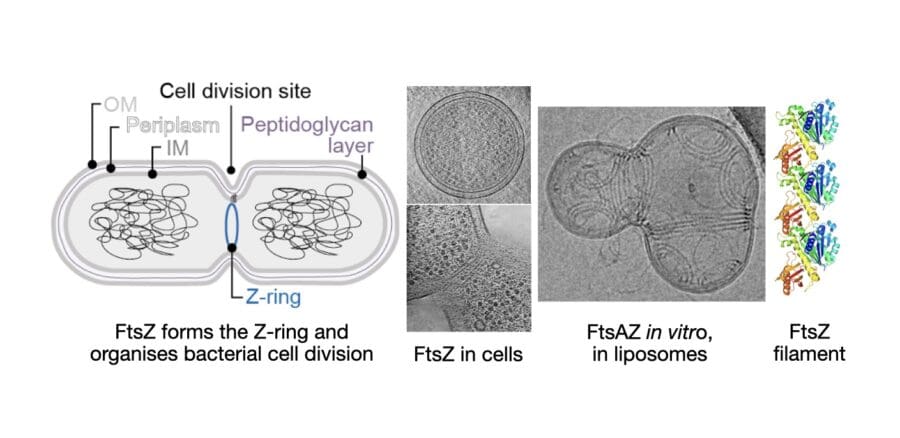
Using structural, imaging and cell biological methods, we investigate the mechanisms that enable cytomotive and non-dynamic filament systems to orchestrate essential life processes such as cell division, cell growth, DNA segregation and morphogenesis.
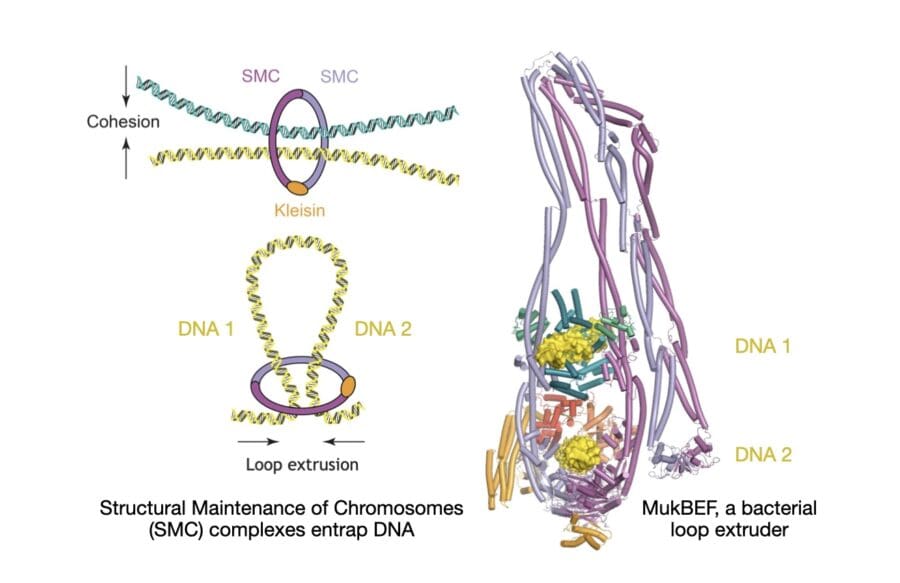
We also work on Structural Maintenance of Chromosomes (SMC) complexes, both bacterial and eukaryotic, in the shape of condensins and cohesins. We are currently using cryo-EM in order to uncover the precise molecular mechanisms employed by these important and ubiquitous facilitators of chromosome biology.