The Principles of the 3Rs
All work involving animals at the LMB is undertaken in accordance with the 3Rs.
Replacement
Replace animal models with scientifically suitable, non-animal methods, such as growing biological cells in culture, computer modelling and human volunteers.
Refinement
Where animal use is necessary, refine methods used in animal handling, including breeding, transportation and experimental procedures to improve welfare and minimise suffering.
Reduction
Where animal use is necessary, reduce the numbers of animals to the minimum without compromising the scientific outcomes.
The LMB works with the National Centre for the Replacement, Refinement and Reduction of Animals in Research (NC3Rs) to ensure that the 3Rs are embedded throughout research projects.
The 3Rs in Practice
Using ultrasound to determine mouse pregnancy
Organoids: lab-grown miniaturised organs
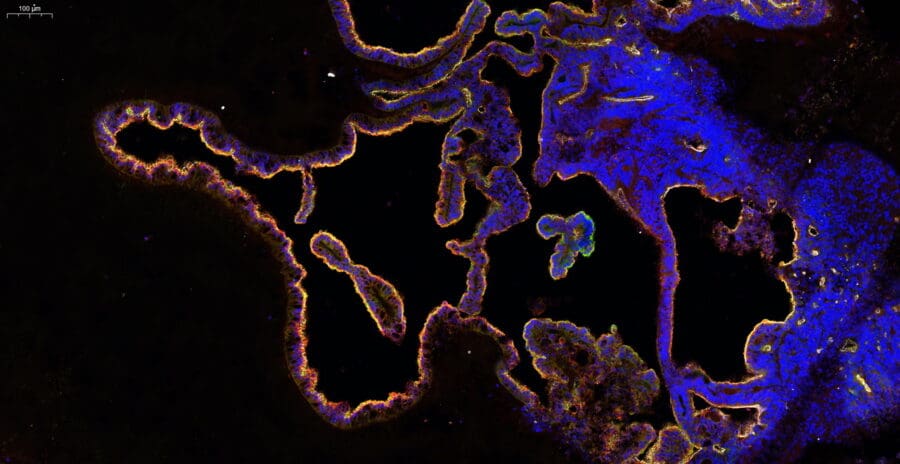
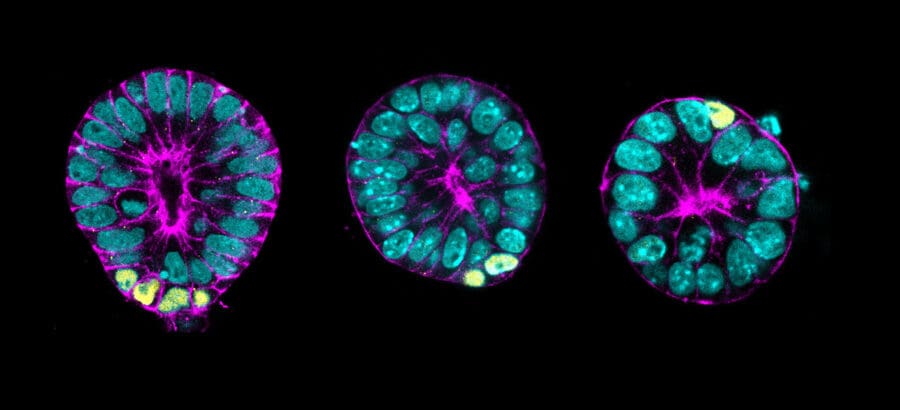
LMB researchers can use human or mouse stem cells to grow 3D organoid structures in tissue culture to simulate complex organs of the body. Organoids can replace or significantly reduce the number of animals used in research, by facilitating studies of chosen organs in isolation from whole-body systems. While undeniably useful, organoid models are limited as they only represent one organ and cannot reflect the complexity of entire organisms.
Studying the brain with cerebral organoids
Cerebral organoids have proved valuable for studying the brain, including neurodevelopmental disorders like autism and schizophrenia. LMB researchers have also developed brain organoids capable of producing cerebrospinal fluid (CSF), which has allowed them to explore how certain drugs access the brain and how it is infected by viruses like SARS-CoV‑2.
This work has been recognised with a 3Rs Prize from the National Centre for the Replacement, Refinement and Reduction of Animals in Research.
Stem cell culture system replicates mouse gastrulation
Many of the cellular processes that occur during early embryo development are unknown. In part, this is because the developmental stage in which stem cells differentiate, known as gastrulation, is very difficult to study.
To overcome this, LMB researchers have developed an in vitro 3D model of self-renewing cells which recapitulates gastrulation. This new model makes it easier to visualise development and has allowed researchers to determine molecular triggers for key stages of differentiation.
Championing non-aversive mouse handling
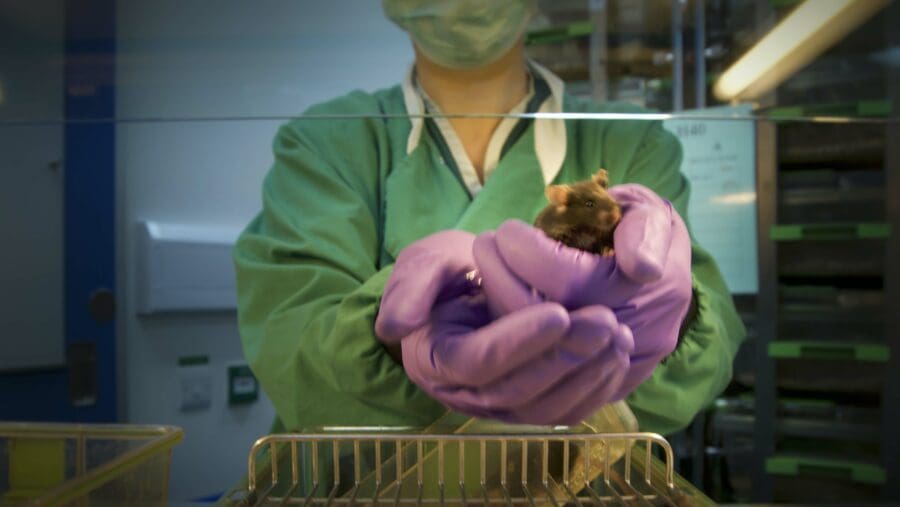
Mice are handled frequently, both in day-to-day care and in the course of scientific procedures. For many years, the accepted way to pick up mice was by their tails, but research has shown that this can cause mice to experience high anxiety levels. LMB animal technicians now champion non-aversive mouse handling instead, which uses a cupped hand or a cardboard tunnel to pick up mice.
Using these new handling techniques has shown beneficial effects in the mice, such as reduced aggression and less anxiety immediately after minor procedures.