Group Leader

John O’Neill

Cellular rhythms, signalling and metabolic regulation

John O'Neill
Group Members
  • Aymen al‑Rawi
  • Andrew Beale
  • Anna Edmondson
  • Joseph Menzies
  • Sebastien Sikora
  • Tea Stapar
  • Emily Watson
  • Tanya Wilson

Most organisms display approximately 24-hour cycles in their biology. In humans and other animals, these circadian rhythms result from daily timing mechanisms in every cell that function together like a biological clock, allowing our physiology to anticipate and prepare for the differing demands of day and night. Normally our biological clock is fine-tuned each day by the schedule we keep, particularly the timing of meals and light exposure. When we see bright light or eat at the wrong biological time, as occurs during shift work or jet lag, it disrupts our biological clock and increases the risk of chronic illnesses such as type 2 diabetes, cardiovascular disease and some cancers. Conversely, the effectiveness of some drugs and surgeries can vary with the biological time of treatment. Delineating the molecular mechanisms that impart daily rhythms to our biology is therefore important for understanding human health and may provide new insights into the prevention and treatment of many diseases.
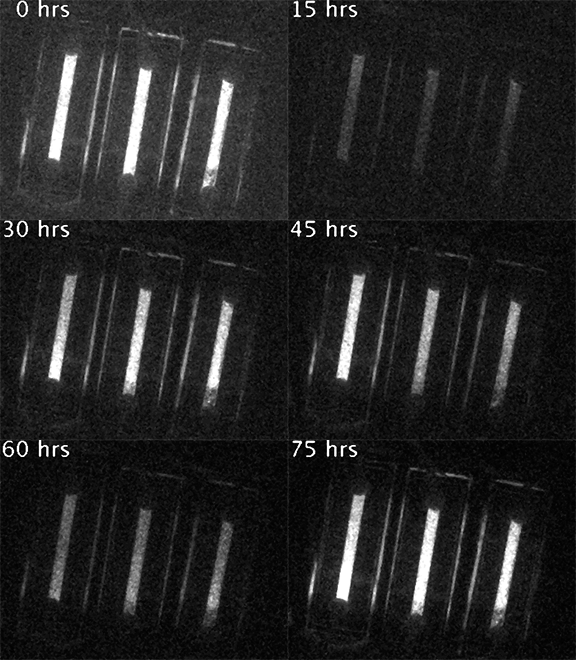
Timelapse video shows populations of fibroblast cells, cultured in microfluidic devices, that luminescence with an approximately 24 hour rhythm because the firefly luciferase gene has been fused with a clock gene called Period2.
Cellular clocks drive daily rhythms of PER protein activity, e.g., in isolated skin cells (Crosby et al., Cell, 2019).

Our research is focussed on understanding the fundamental mechanisms of daily cellular timekeeping and how circadian regulation of biological function is orchestrated to facilitate cellular and organismal homeostasis. To achieve these goals, we employ a wide range of molecular biology, proteomic, metabolomic and biochemical techniques, supported by real-time fluorescent and bioluminescent reporters.
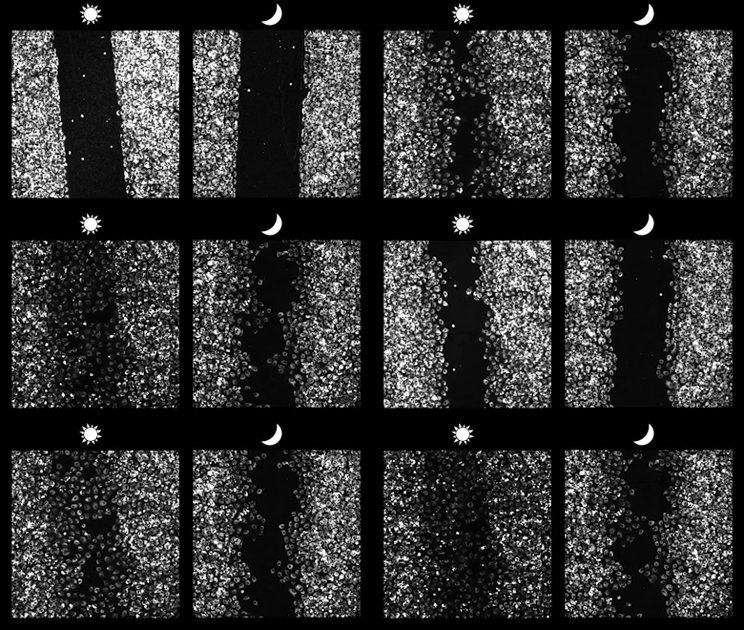
Timelapse video shows that, in vitro, monolayers of fibroblast cells migrate more quickly to heal a wound incurred during the daily active phase than during the rest phase, that usually coincides with sleep
Wounds incurred in the active phase heal more quickly, partly because cells migrate faster (Hoyle et al., STM, 2017).

Selected Publications

Circadian regulation of macromolecular complex turnover and proteome renewal.Seinkmane E, Edmondson A, Peak-Chew SY, Zeng A, Rzechorzek NM, James NR, West J, Munns J, Wong DC, Beale AD, O’Neill JSEMBO J 43(13): 2813-2833 (2024)
Macromolecular condensation buffers intracellular water potential.Watson JL, Seinkmane E, Styles CT, Mihut A, Krüger LK, McNally KE, Planelles-Herrero VJ, Dudek M, McCall PM, Barbiero S, Vanden Oever M, Peak-Chew SY, Porebski BT, Zeng A, Rzechorzek NM, Wong DCS, Beale AD, Stangherlin A, Riggi M, Iwasa J, Morf J, Miliotis C, Guna A, Inglis AJ, Brugués J, Voorhees RM, Chambers JE, Meng QJ, O’Neill JS, Edgar RS, Derivery ENature 623(7988): 842-852 (2023)
CRYPTOCHROMES promote daily protein homeostasis.Wong DCS, Seinkmane E, Zeng A, Stangherlin A, Rzechorzek NM, Beale AD, Day J, Reed M, Peak-Chew SY, Styles CT, Edgar RS, Putker M, O’Neill JSEMBO J 41(1): e108883 (2022)
Compensatory ion transport buffers daily protein rhythms to regulate osmotic balance and cellular physiology.Stangherlin A, Watson JL, Wong DCS, Barbiero S, Zeng A, Seinkmane E, Chew SP, Beale AD, Hayter EA, Guna A, Inglis AJ, Putker M, Bartolami E, Matile S, Lequeux N, Pons T, Day J, van Ooijen G, Voorhees RM, Bechtold DA, Derivery E, Edgar RS, Newham P, O’Neill JSNat Commun 12(1): 6035 (2021) Epub