Group Leader

Gregory Jefferis

Genes, circuits and behaviour in Drosophila

Gregory Jefferis
Group Members
  • Isabella Beckett
  • Sebastian Cachero
  • Shahar Frechter
  • Florian Kampf
  • Markus Pleijzier
  • Philipp Schlegel
  • Valeria Silva‑Moeller
  • Tomke Stuerner
  • Catherine Whittle

Our group studies the neural circuit basis of behaviour using the Drosophila olfactory system as our main model. We were the first to identify widespread sex differences in the neuroanatomy of the fly brain, and to uncover a sex-specific switch in connectivity and information flow within an animal brain. Recent work has combined electron microscopy and whole-brain connectomics with in vivo physiology and behaviour to understand the interaction between learned and innate behaviour. All of this work builds on molecular and computational tools for brain mapping at cellular and synaptic resolution. Most recently, this has included leading roles in delivering the first synaptic-resolution connectomes for both the brain and nerve cord of an adult animal.
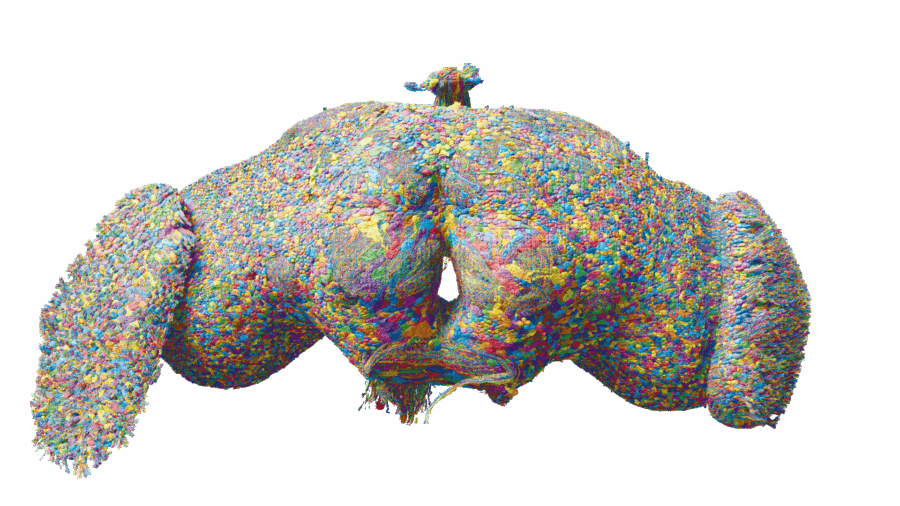
3D surface rendering of the fly brain. Neuronal cell bodies are visible as thousands of small circles in many different colours on the surface. Some elongated nerve bundles travel down towards the nerve cord
All 139,255 neurons of the adult fly brain connectome. 3D rendering on the LMB’s compute cluster by Philipp Schlegel. See Schlegel et al., Nature, 2024 for details and flywire.ai for raw data.

Going forwards we have three main research areas: Comparative connectomics to reveal the organisational logic of circuit differences across sexes and species; molecular connectomics so that we simultaneously understand the connection patterns and molecular composition of cell types in the brain; and physiological and behavioural studies building on this knowledge to understand the genetic and circuit basis of both innate sexually dimorphic behaviours and those that are modified by experience.
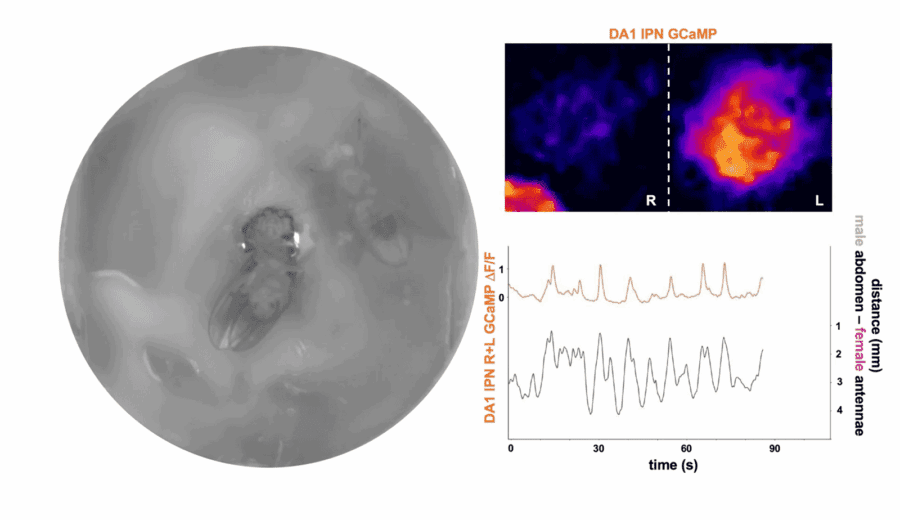
A female fly is mounted in a holder while a male walks around. Brain scans of neuronal activity in her olfactory system are shown in bright colours. An evolving graph shows how activity correlates with the distance from the male to the female’s head.
Simultaneous recording of olfactory neurons on both sides of the brain reveals directional responses to a sex pheromone (see Taisz et al., Cell, 2023).

Selected Publications

Whole-brain annotation and multi-connectome cell typing of Drosophila.Schlegel P, Yin Y, Bates AS, Dorkenwald S, Eichler K, Brooks P, Han DS, Gkantia M, Dos Santos M, Munnelly EJ, Badalamente G, Serratosa Capdevila L, Sane VA, Fragniere AMC, Kiassat L, Pleijzier MW, Stürner T, Tamimi IFM, Dunne CR, Salgarella I, Javier A, Fang S, Perlman E, Kazimiers T, Jagannathan SR, Matsliah A, Sterling AR, Yu SC, McKellar CE,  , Costa M, Seung HS, Murthy M, Hartenstein V, Bock DD, Jefferis GSXENature 634(8032): 139-152 (2024)
Neurotransmitter classification from electron microscopy images at synaptic sites in Drosophila melanogaster.Eckstein N, Bates AS, Champion A, Du M, Yin Y, Schlegel P, Lu AK, Rymer T, Finley-May S, Paterson T, Parekh R, Dorkenwald S, Matsliah A, Yu SC, McKellar C, Sterling A, Eichler K, Costa M, Seung S, Murthy M, Hartenstein V, Jefferis GSXE, Funke JCell 187(10): 2574-2594.e23 (2024)
Generating parallel representations of position and identity in the olfactory system.Taisz I, Donà E, Münch D, Bailey SN, Morris BJ, Meechan KI, Stevens KM, Varela-Martínez I, Gkantia M, Schlegel P, Ribeiro C, Jefferis GSXE, Galili DSCell 186(12): 2556-2573.e22 (2023)
Communication from Learned to Innate Olfactory Processing Centers Is Required for Memory Retrieval in Drosophila.Dolan MJ, Belliart-Guérin G, Bates AS, Frechter S, Lampin-Saint-Amaux A, Aso Y, Roberts RJV, Schlegel P, Wong A, Hammad A, Bock D, Rubin GM, Preat T, Plaçais PY, Jefferis GSXENeuron 100(3): 651-668.e8 (2019)