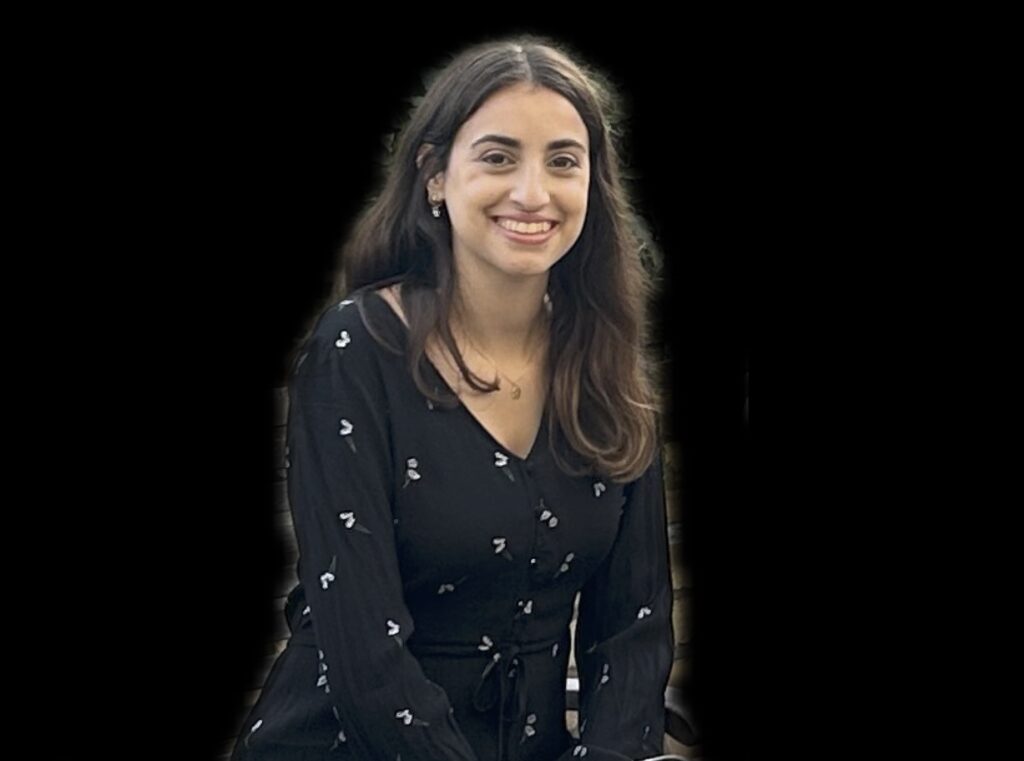
The Bertolotti group, Neurobiology Division, Biological Services and the whole of the LMB is deeply saddened to share that Saja Fadila died on the 22nd of January after a one year battle with cancer.
Saja joined Anne Bertolotti’s group as a postdoc with an EMBO fellowship in June 2024. Before joining the LMB, Saja completed her PhD with Moran Rubinstein at the Sagol School of Neuroscience at Tel Aviv University. She was Moran’s first student and completed and published an impressive body of work. She characterised a mouse model of Dravet syndrome and developed a novel gene therapy approach for this devastating developmental and epileptic encephalopathy.
Saja joined Anne’s group to study and manipulate resilience pathways involved in neurodegenerative diseases, cognition and aging. Here, she harnessed mouse genetics to address an outstanding question with both fundamental and medical relevance. She was a smart, energetic and determined scientist. She was also an efficient researcher, generating robust and important results in a short period of time – so much so that she was invited to present at a Neurobiology Division seminar only 6 months after starting her postdoc.
Saja joined the LMB during a turbulent time for her home country, yet she carried a radiance that spread happiness throughout her group and brought with her the sun of her home country. Saja was determined to return to Israel to establish her own group after her postdoc at the LMB, combining her passion for neurological disorders and continuing to grow her expertise in molecular mechanisms of diseases.
She was not only a brilliant scientist but a nice colleague to all. Those who had the privilege to work with her will remember her smile, energy and kindness. She loved working at the LMB, including the cakes from the canteen and all the support she received for her work, from her colleagues in the Bertolotti group and the Biological Services group. She had a sharp and critical mind that she loved to engage discussing scientific papers.
Her Group Leader, Anne, commented, “I was impressed by Saja from our first conversation and had no doubt that Saja would develop a stellar academic career. It is tragic that she will not have a chance to accomplish her dream. However, despite her short career, her work has left an important mark, and Saja’s memory and scientific legacy will live on.”
Saja will be sorely missed by her colleagues and friends at the LMB.
Saja has returned to Tira in Israel. We encourage all written tributes and images you had with Saja to be shared with Savannah Kumari from the Neurobiology Divisional Office who will collate them for her family.
Further references