Our Collections
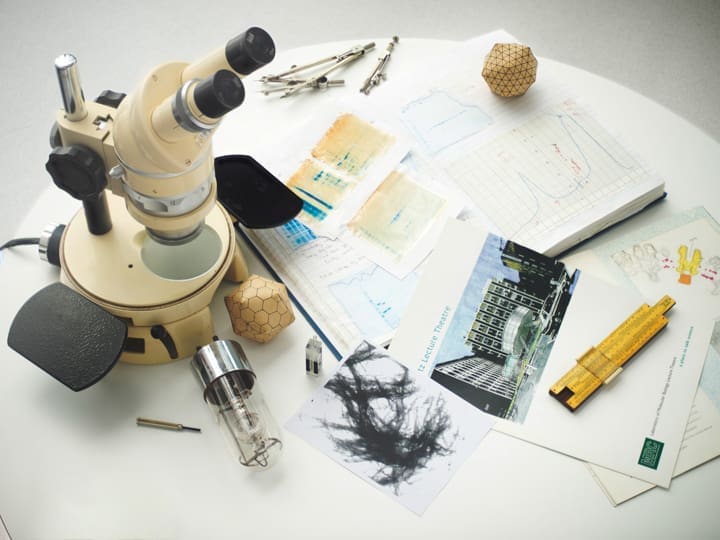
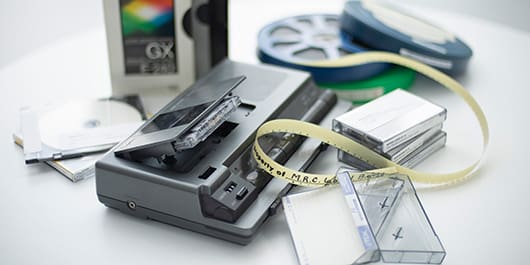
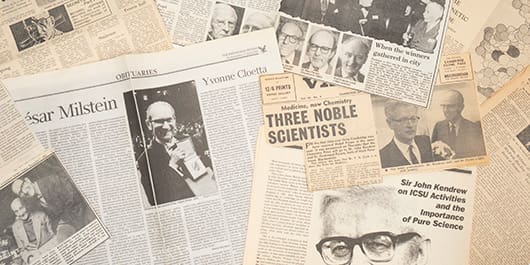
The LMB Archive holds a wealth of information relating to the Institute, including material about the formation of the MRC Unit for the Study of the Molecular Structure of Biological Systems in 1947, which became the LMB in 1962. Collections comprise of physical and digital records, photographs, video and sound recordings and objects. For more information, please view the Archive Collecting Policy.
Collection Highlights
Take a closer look at some of the exciting material from the Archive.
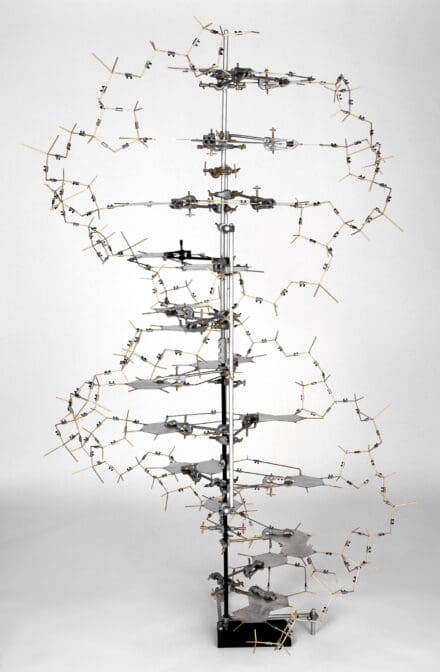
Metal, (H) 200 x (W) 120 x (D) 120 cm
On display at the LMB
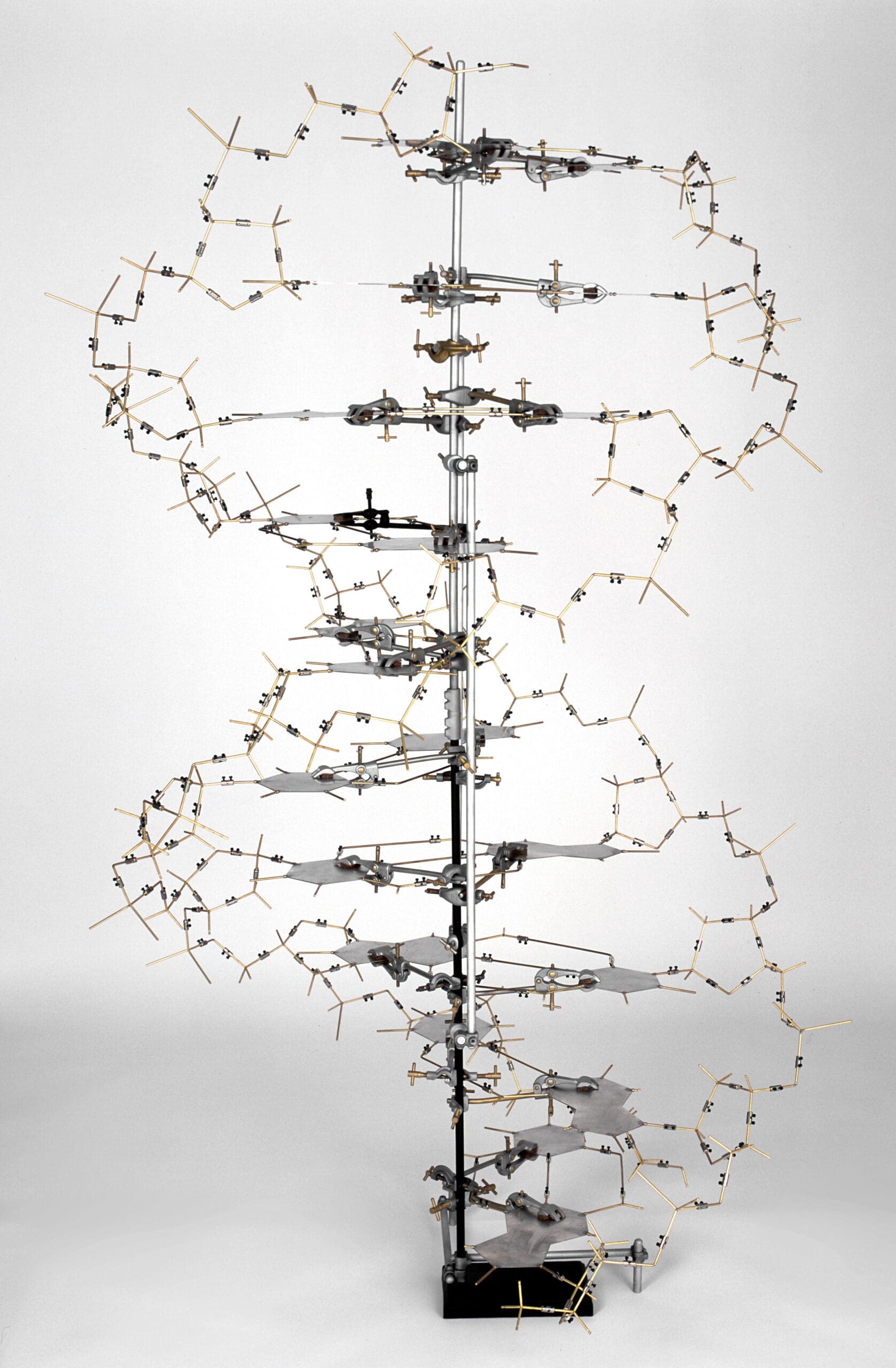
This model is a reproduction of James Watson and Francis Crick’s 1953 skeletal model. It was built by Roger Lucke and Claudio Villa, LMB Workshop, with parts supplied by Cambridge Repetition Engineers Ltd. The model was unveiled for the ‘DNA: 50 years of the double helix’ exhibition, Cambridge, 2003.
Paper
Stored in the LMB Archive
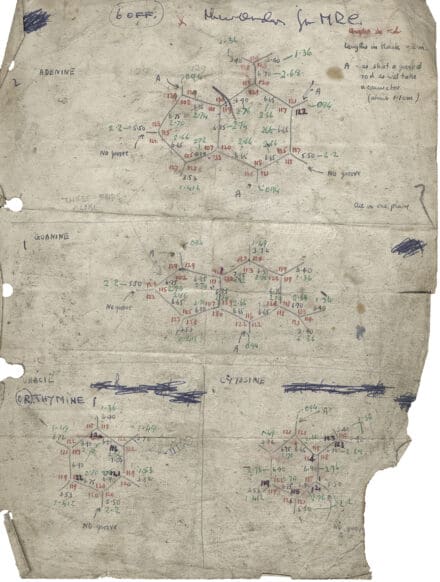
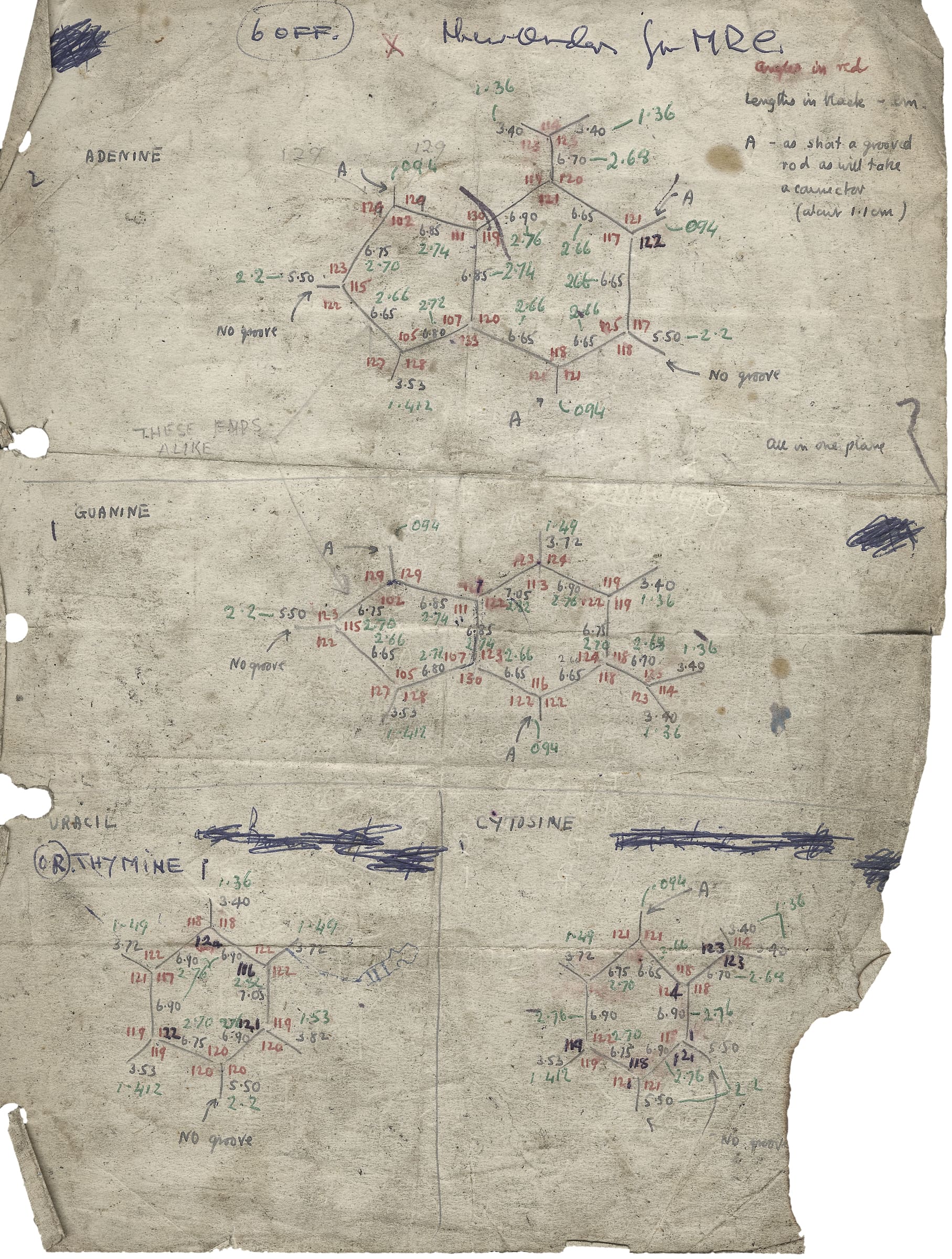
A drawing provided by the LMB to Cambridge Repetition Engineers Ltd. to instruct on the creation of a scaled atomic model. This image includes information about DNA bases, Adenine, Guanine, Thymine, and Cytosine. This page is one of nine in the collection showcasing communications between the LMB and Cambridge Repetition Engineers Ltd.
Balsa wood
On display at the LMB
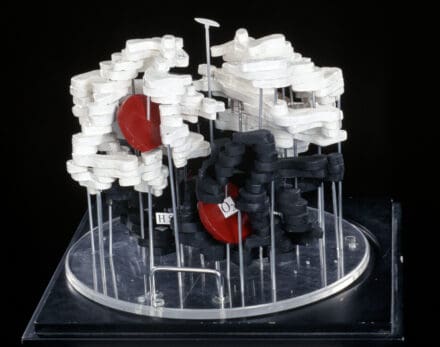
This model shows haemoglobin, the protein of the red blood cells. It was created by Max Perutz at the Cavendish Laboratory in Cambridge and, alongside John Kendrew’s related model of myoglobin, was among the first protein structures ever solved.
Paper
Stored in the LMB Archive
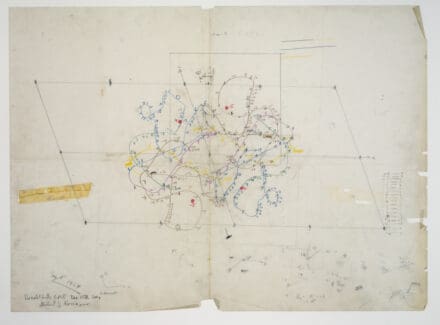
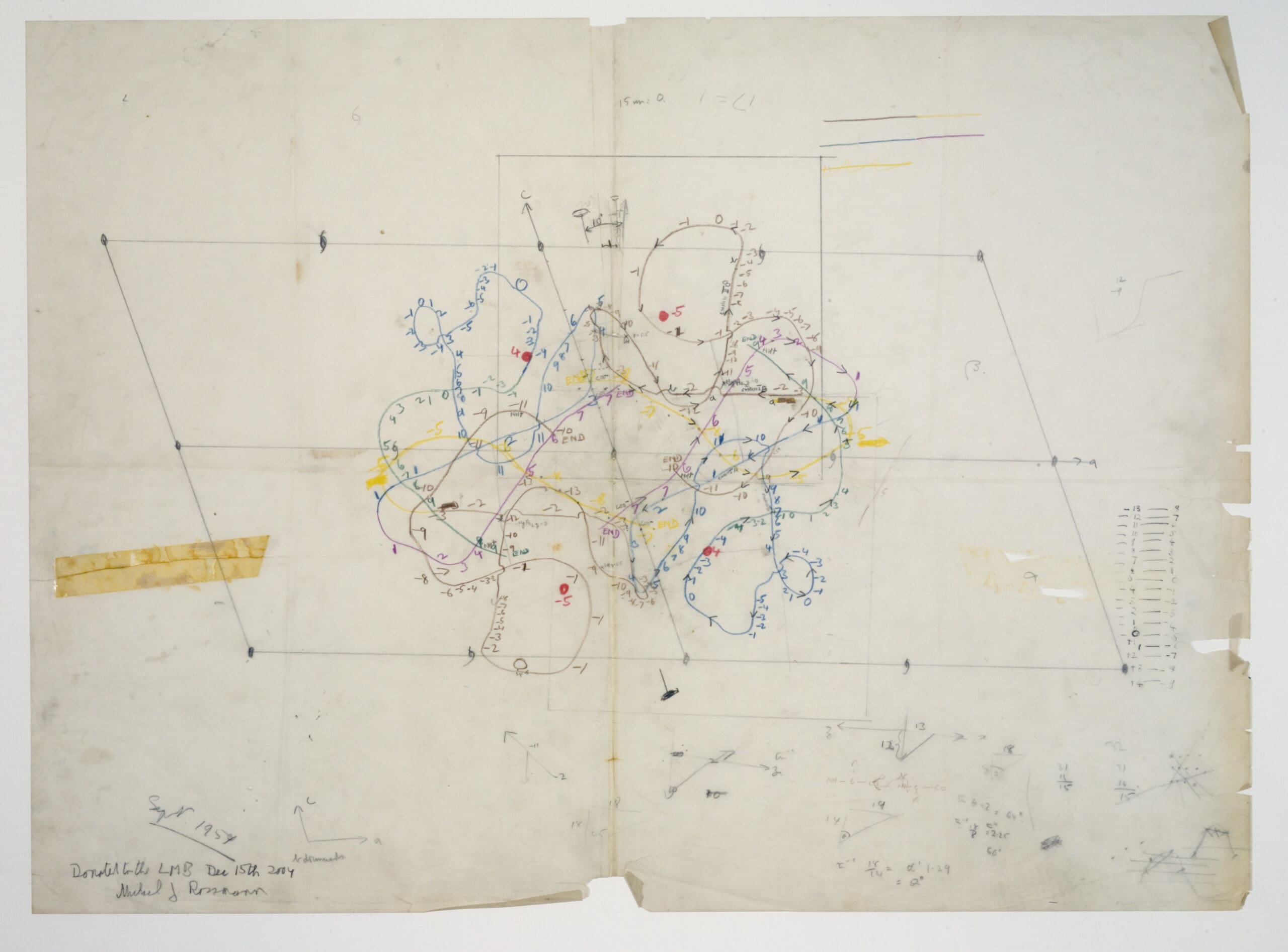
This drawing is part of a series completed by Michael Rossmann when he worked at the LMB. His mathematical and computational skills helped determine the relative y-axis coordinates of the heavy atom sites for the different heavy-atom derivatives of haemoglobin, using data collected by Max Perutz and Ann Cullis, his research assistant.
Plaster, (H) 60 x (W) 98 x (D) 98 cm
On display at the LMB
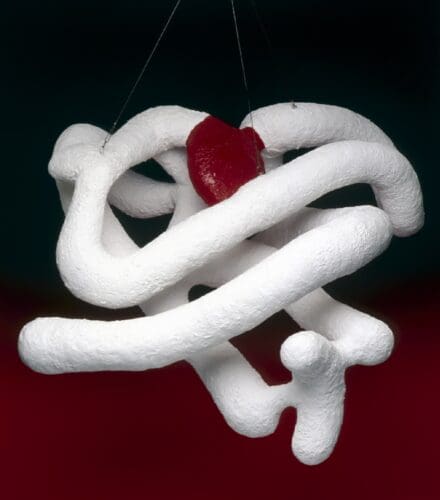
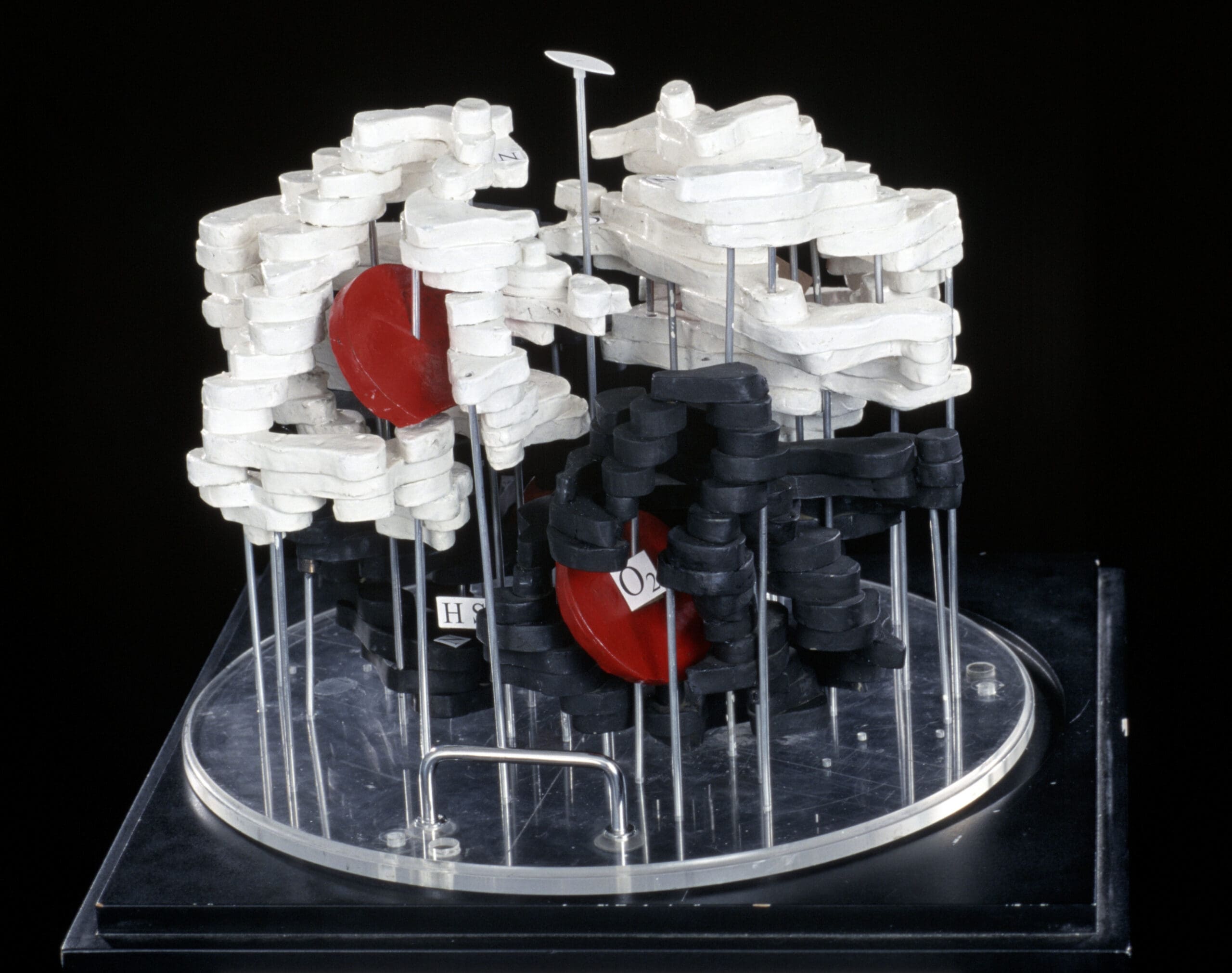
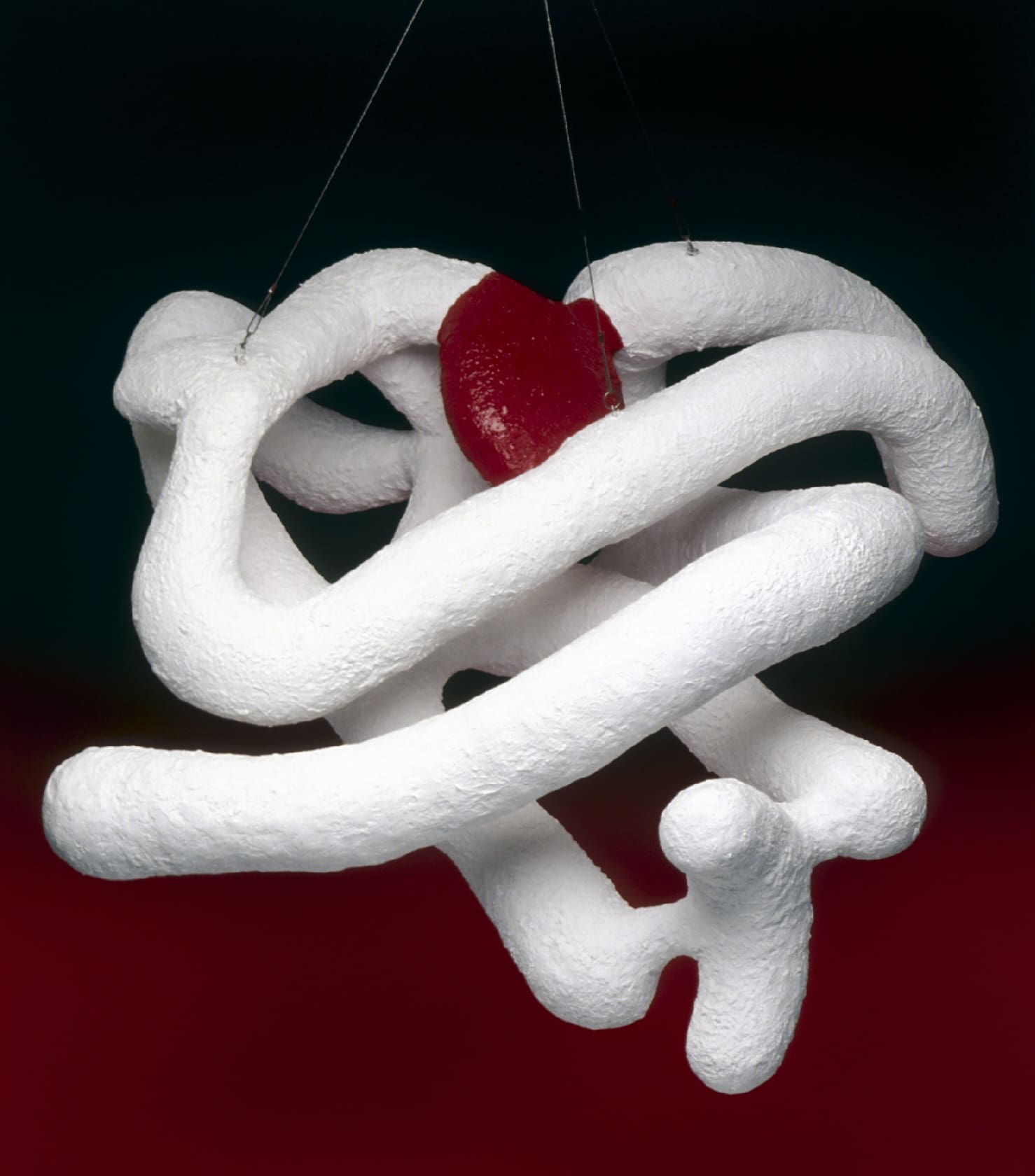
This is a large-scale version of John Kendrew’s original plasticine model of myoglobin. Model building was a crucial step in determining the protein’s structure and John was surprised by the unexpected twists in the chains. This model was used for demonstrations and exhibitions, and it was previously suspended from the ceiling in the original LMB building.
Paper
Stored in the LMB Archive
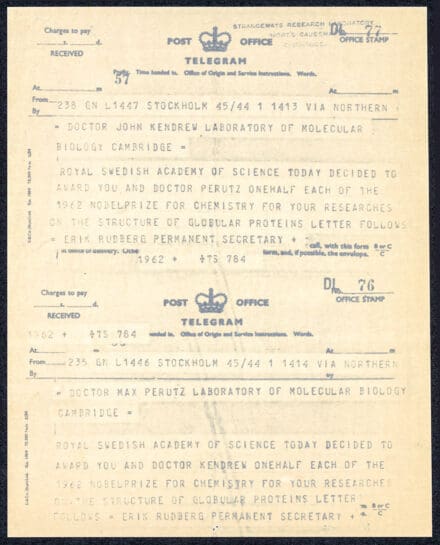
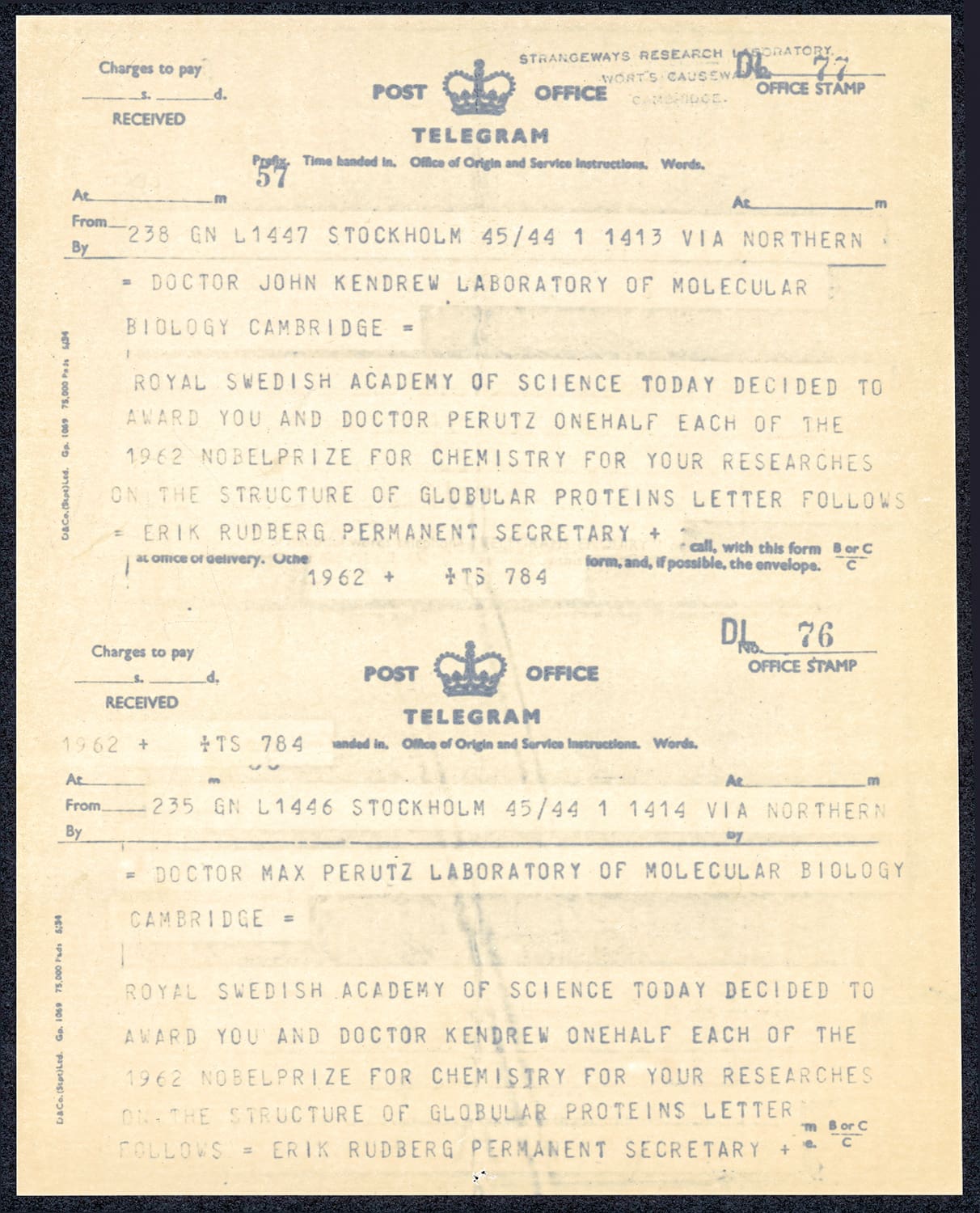
This telegram notified John Kendrew and Max Perutz that they were jointly being awarded the 1962 Nobel Prize in chemistry for their work on solving the structures for myoglobin and haemoglobin respectively.
Paper
Stored in the LMB Archive
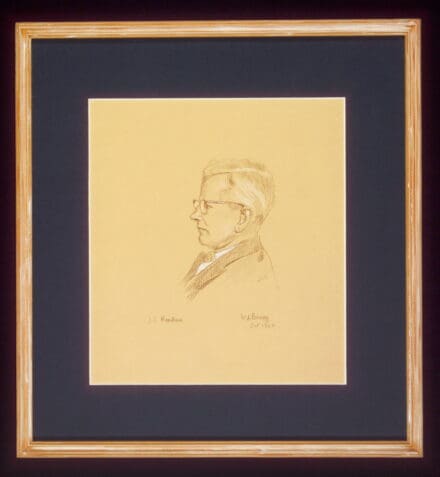
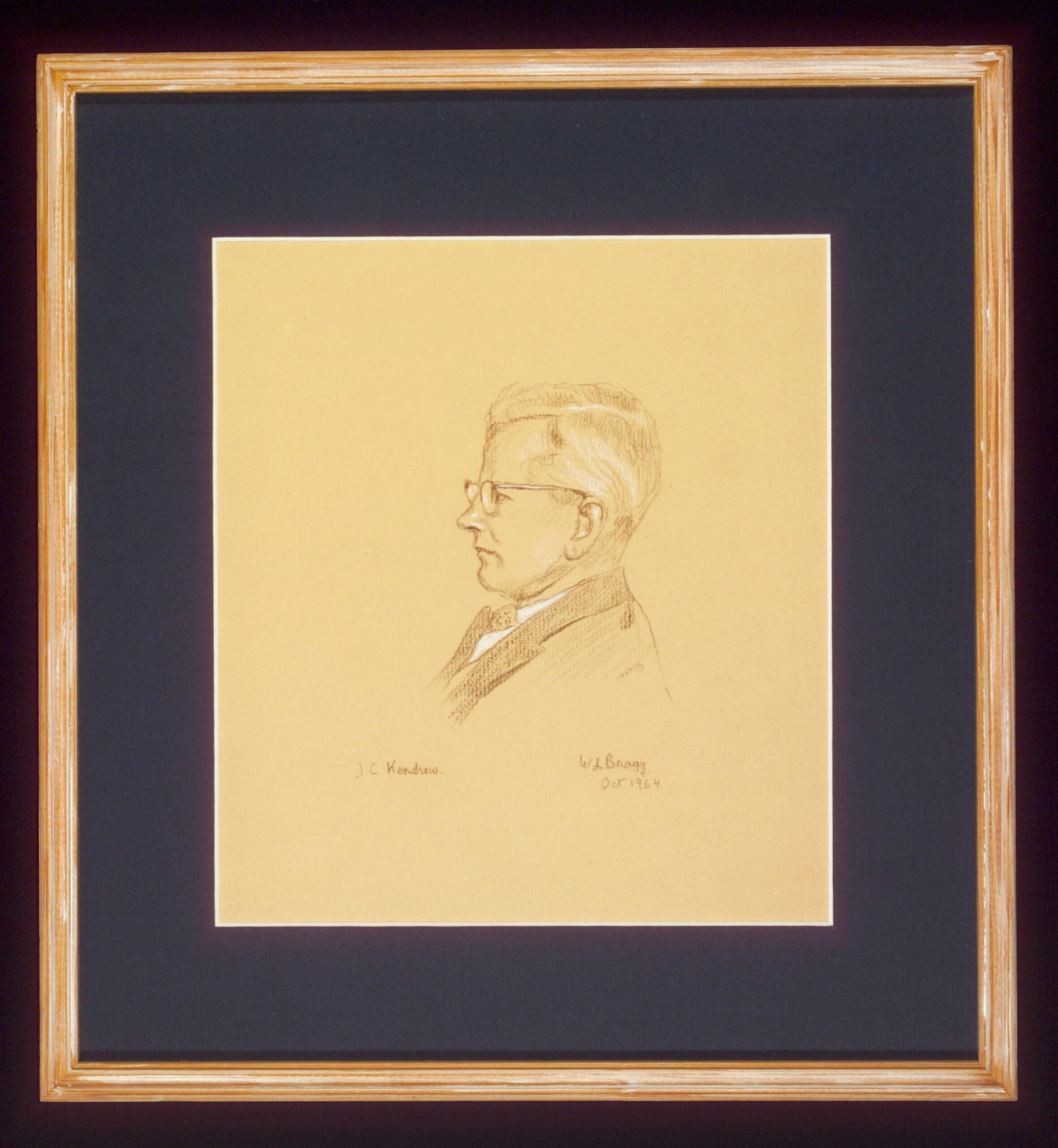
This profile portrait of John Kendrew was created by fellow scientist William Lawrence Bragg. Lawrence was awarded the Nobel Prize in physics in 1915 for his work on diffraction and crystal structure. John was one of the founding scientists of the MRC Unit which went on to become the LMB. He was awarded the Nobel Prize in chemistry in 1962 for determining the structure of myoglobin.
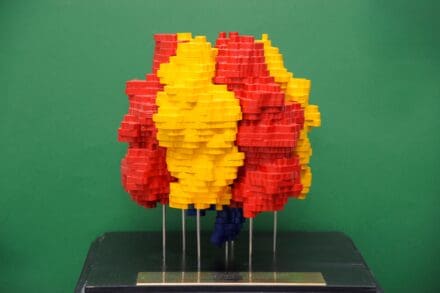
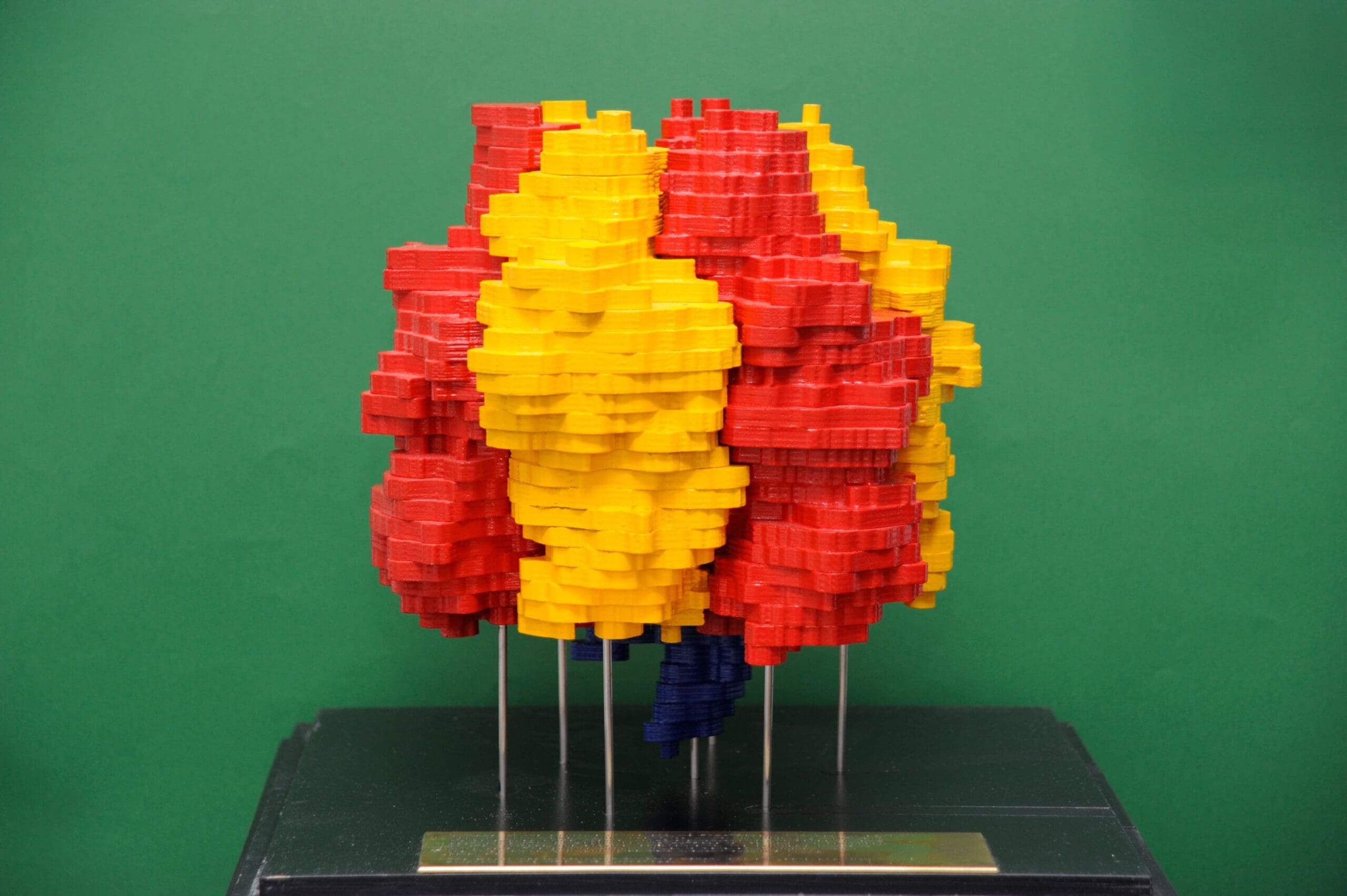
F1-ATPase enzyme, 1997, ART.250
Balsa wood, (H) 36.5 x (W) 39 x (D) 39 cm
On display at the LMB
This model shows the structure of F1-ATPase which is the catalytic component of ATP synthase, the enzyme responsible for the synthesis of ATP in living cells. The structure of this enzyme was solved in 1994 by John Walker, and he was awarded the joint Nobel Prize in chemistry in 1997. The gamma subunit (blue) is believed to rotate within the three alpha (red) and three beta (yellow) subunits during catalysis. The model was constructed by Chris Hellon, Andrew Leslie and Mick Fordham in the LMB Workshop.
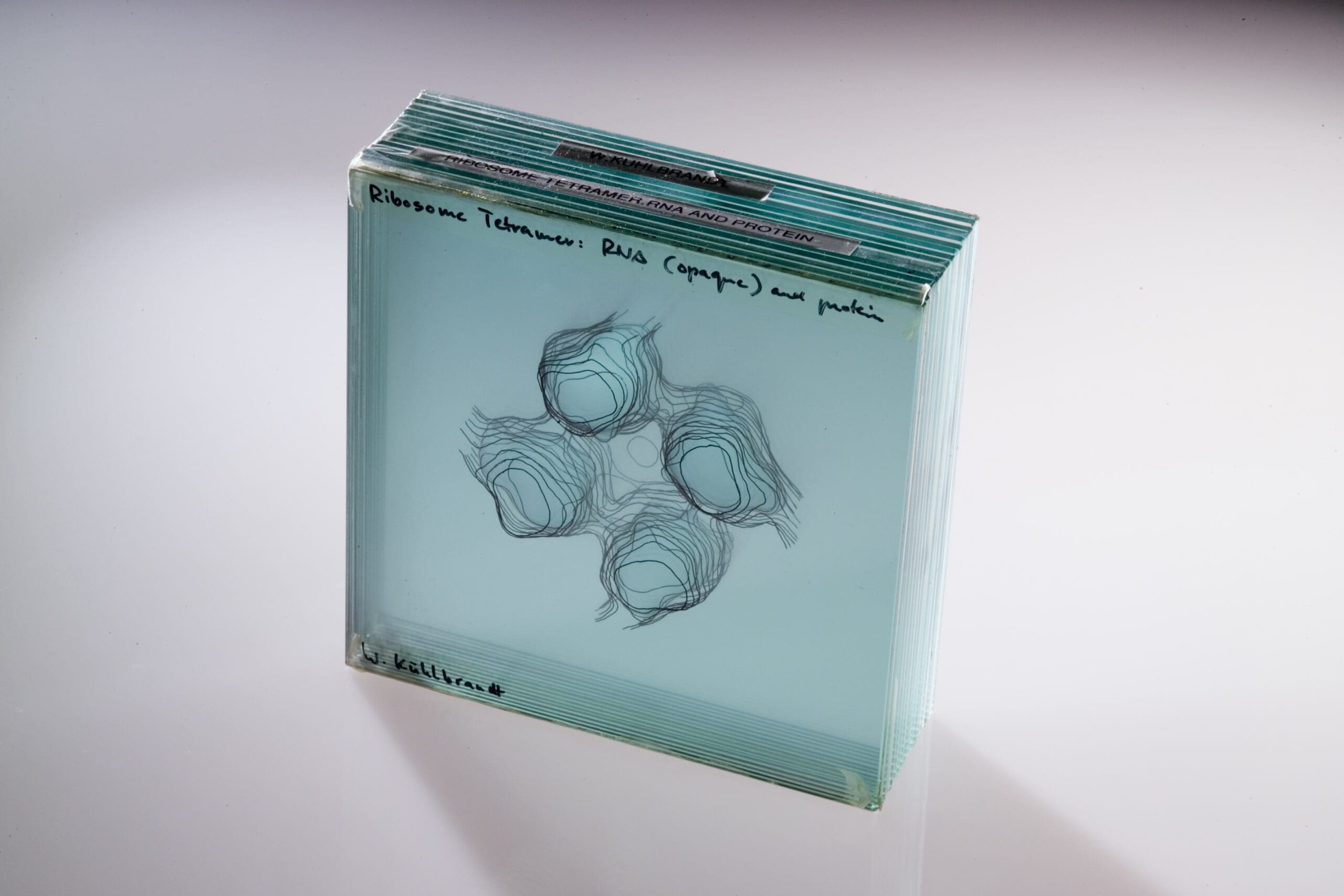
Glass, (H) 24 x (W) 26 x (D) 11 cm
Stored in the LMB Archive
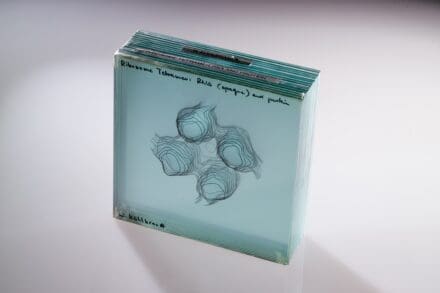
Large glass layered contour map of the ribosome tetramer from the lizard Lacerta sicula showing the distribution of RNA (opaque) and protein (clear) at ~50 Å resolution. This model is based on the work of Werner Kühlbrandt during his PhD, 1977-1981, under the supervision of Nigel Unwin.
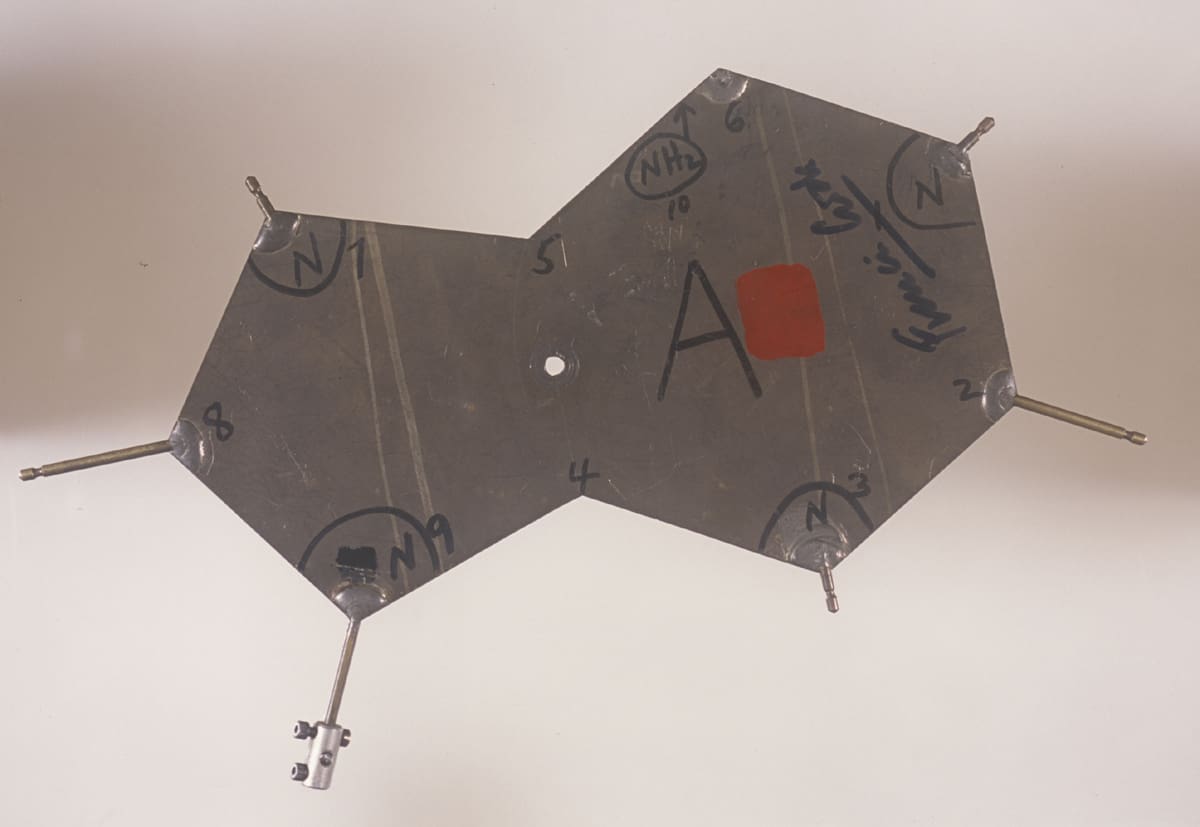
Metal, (H) 29.5 x (W) 15 cm
Stored in the LMB Archive
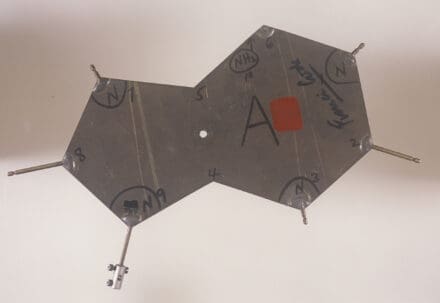
This DNA base plate (adenine) is one of the original bases from James Watson and Francis Crick’s 1953 model. It was found by Arther Arnone in the 1962 LMB building. Arnone recounts that Crick was walking past at the time, and he asked him to sign it. The following year, when visiting the LMB, Watson signed the reverse side.
Add to the Archive
Our collections are always growing, and we welcome deposits of physical and digital items that reflect our history, members and research. Contact the Archive to discuss your material.