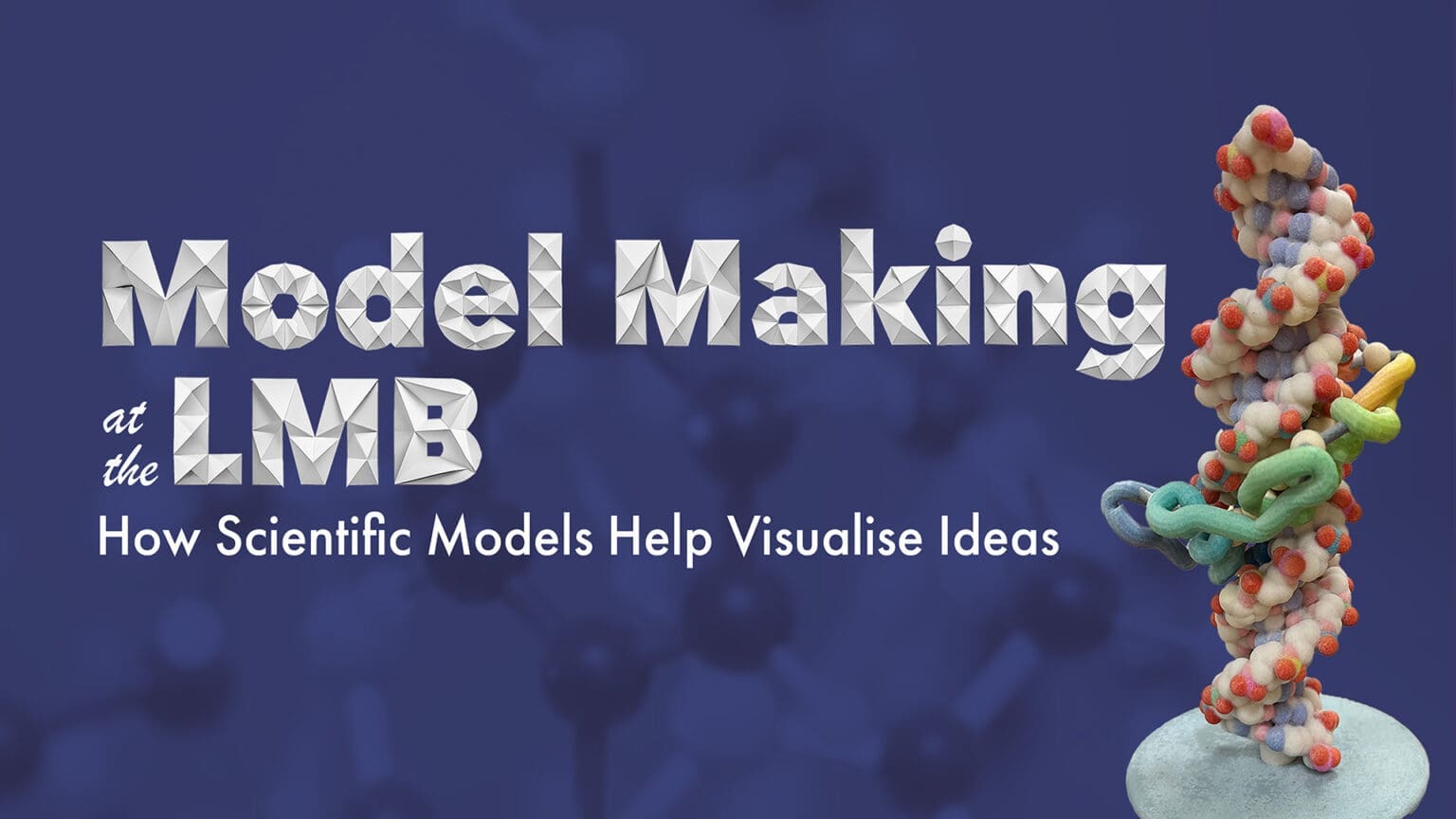
This exhibition showcases the development of scientific models, from temporary objects used to manipulate form to more robust structures used for outreach and demonstration. These objects are often underappreciated for the value they have in facilitating the creation and confirmation of theories for molecular structures. However, they have played a major part in research, and this display specifically shows the impact they have had on the LMB.
3D models provide different ways of understanding and communicating scientific structures. LMB scientists have historically used models in the initial problem-solving stage of research and in refining their ideas. Achievements such as the structures for DNA and the 30S ribosomal subunit are best remembered through an association with a 3D model. The models, photographs and drawings are from the LMB Archive and demonstrate the ways in which models have developed in use, detail and format. This exhibition takes visitors on a journey to understand models as ad hoc objects created in the labs, as more robust, professionally constructed items and as outreach material to help explain scientific ideas.
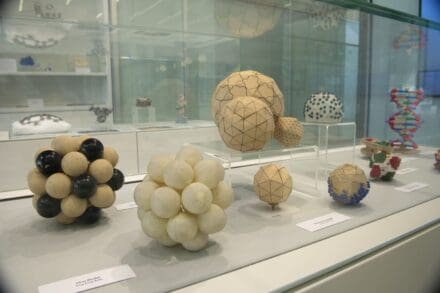
The exhibition particularly showcases the specialist nature of model making, through companies such as Cambridge Repetition Engineers Ltd. (1954-2019) and the LMB’s own Mechanical Workshop (1962-present), facilitating the creation of bespoke instruments and models. Historically, the LMB also featured a model room to create structures in-house, and models are often seen displayed around LMB buildings past and present.
An interesting feature of the exhibition is the development of molecular structures as seen in different levels of detail over time. For example, there are several versions of myoglobin on display, from the initial John Kendrew ‘sausage model’, to further developments of viewing the protein at 6 Å and 2 Å resolution scales. These visual comparisons help us to understand the leaps in technology and scientific discovery over the years.
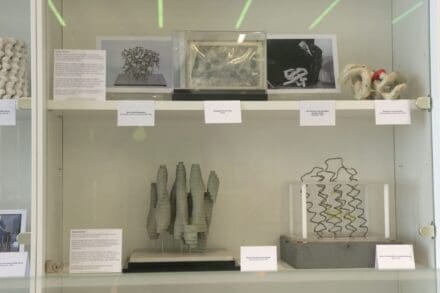
As scientific analysis of molecular structures has become more refined over the years, model making methods and processes have adapted so that complex structures can be communicated. Since the 1980s, computational software has played a big part in the development of model making.
This display demonstrates the relevance of both physical and digital models in science at the LMB.