Mariann Bienz
Molecular mechanisms of Wnt signal transduction
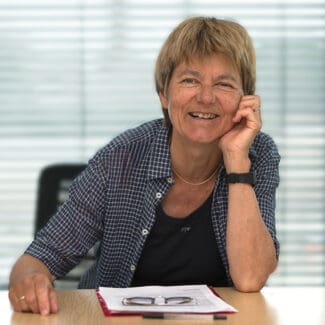
I completed my degree and PhD at the University of Zürich in 1981. After five years of postdoctoral studies at the LMB, I was appointed a professor of Zoology at the University of Zürich. In 1991, I moved my group to the Cell Biology Division of the LMB and later switched to the PNAC Division where I continued as Divisional Head until 2018, when I became Deputy Director of the LMB.
My work in Zürich examined how developmental control genes are transcribed in response to positional cues in the embryo. I pioneered the use of the Drosophila embryonic midgut as a model system. My main discovery was an inductive cascade that emanates from the visceral mesoderm and patterns the underlying midgut epithelium. A pivotal signal in this process is Wnt, which specifies different midgut cell types in a dose-dependent manner.
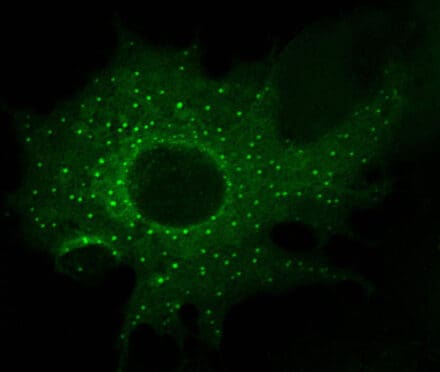
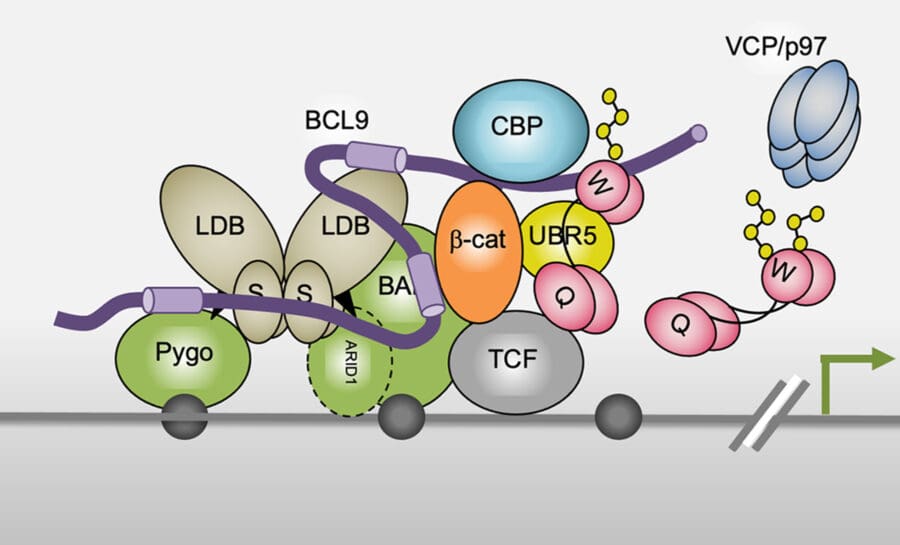
At the LMB, I focussed on the molecular mechanisms that govern Wnt signal transduction from the cell membrane to the nucleus. My shift towards mechanistic studies was motivated by mounting evidence that dysregulated Wnt signalling drives cancer in many tissues. Elucidating the molecular details of this pathway became a priority as it could reveal new therapeutic opportunities. My initial focus on Wnt-induced transcription culminated in the discovery of the Wnt enhanceosome, a multiprotein complex generating transcriptional responses by integrating inputs from Wnt and other signals with factors determining cell lineages. Shifting my attention to upstream signalling events, I discovered the pivotal role of Dishevelled in assembling Wnt signalosomes through dynamic head-to-tail polymerisation, which enhances the avidity of signalosome components for their effectors. Reversible polymerisation emerged as a wide-spread mechanistic principle underpinning biological processes in all kingdoms of life.
I was elected an EMBO member in 1989, a Fellow of the Royal Society in 2003 and a Fellow of the Academy of Medical Sciences in 2006. In 1990, I received the Friedrich Miescher Prize of the Swiss Biochemical Society. I served on numerous grant and career panels, scientific advisory boards and councils in the UK and abroad.