John O’Neill
Cellular rhythms, signalling and metabolic regulation

Most organisms display approximately 24-hour cycles in their biology. In humans and other animals, these circadian rhythms result from daily timing mechanisms in every cell that function together like a biological clock, allowing our physiology to anticipate and prepare for the differing demands of day and night. Normally our biological clock is fine-tuned each day by the schedule we keep, particularly the timing of meals and light exposure. When we see bright light or eat at the wrong biological time, as occurs during shift work or jet lag, it disrupts our biological clock and increases the risk of chronic illnesses such as type 2 diabetes, cardiovascular disease and some cancers. Conversely, the effectiveness of some drugs and surgeries can vary with the biological time of treatment. Delineating the molecular mechanisms that impart daily rhythms to our biology is therefore important for understanding human health and may provide new insights into the prevention and treatment of many diseases.
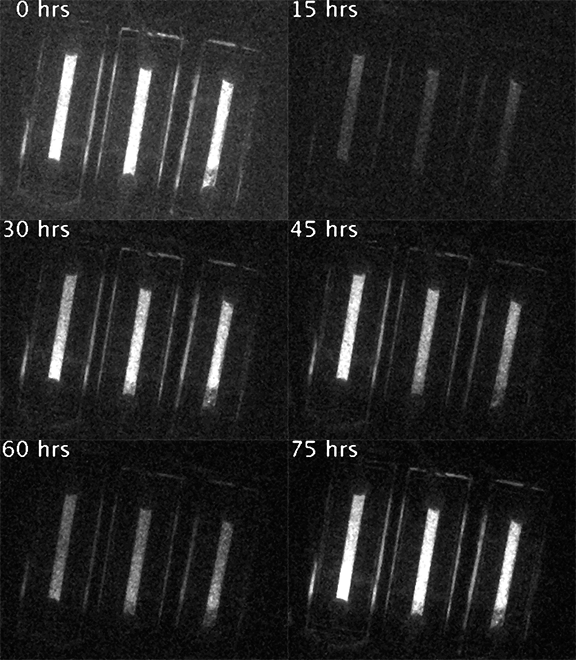
Our research is focussed on understanding the fundamental mechanisms of daily cellular timekeeping and how circadian regulation of biological function is orchestrated to facilitate cellular and organismal homeostasis. To achieve these goals, we employ a wide range of molecular biology, proteomic, metabolomic and biochemical techniques, supported by real-time fluorescent and bioluminescent reporters.