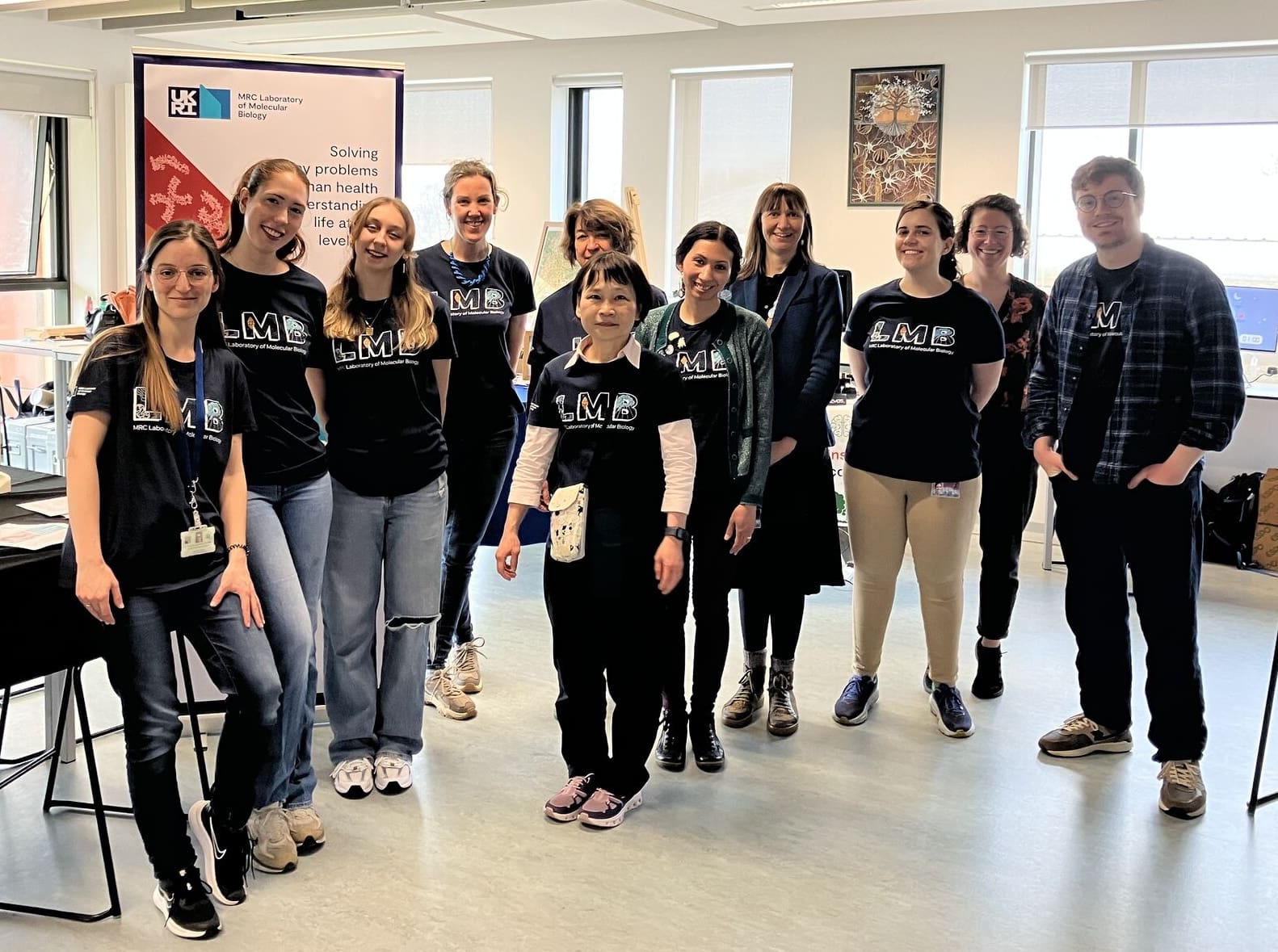
LMB scientists showcased their work at the Cambridge Festival with a hands-on activity about the molecular mechanisms of behaviour and science-art collaboration about body clocks.
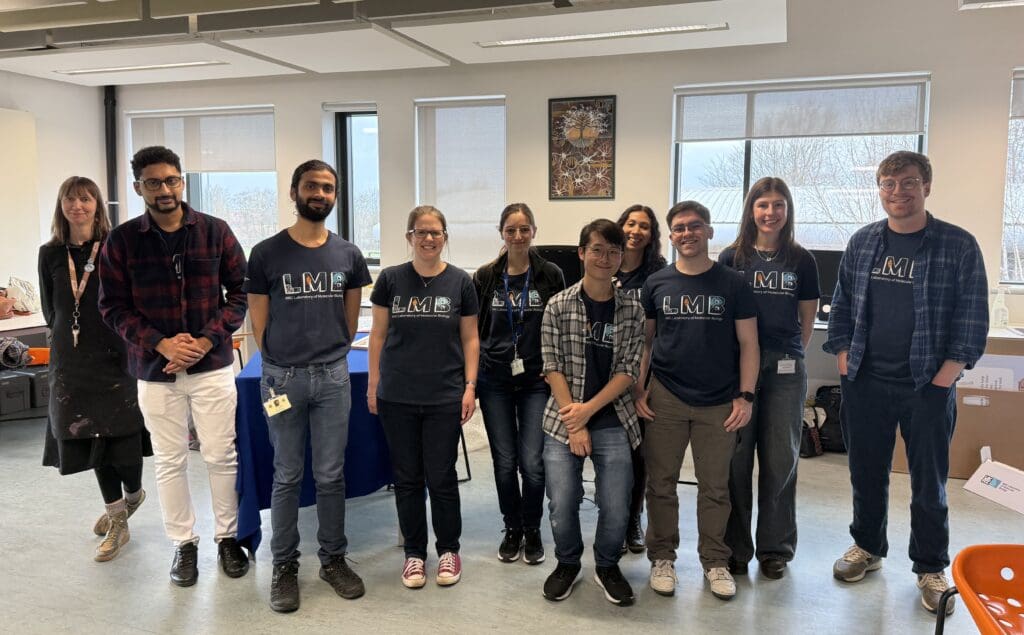
During the first weekend of the 2025 Cambridge Festival, LMB scientists offered two hands-on activities at the Cambridge Academy for Science and Technology. Over 270 people participated and learned about the scale of molecular biology and our body clocks.
Molecular mechanisms of behaviour and development
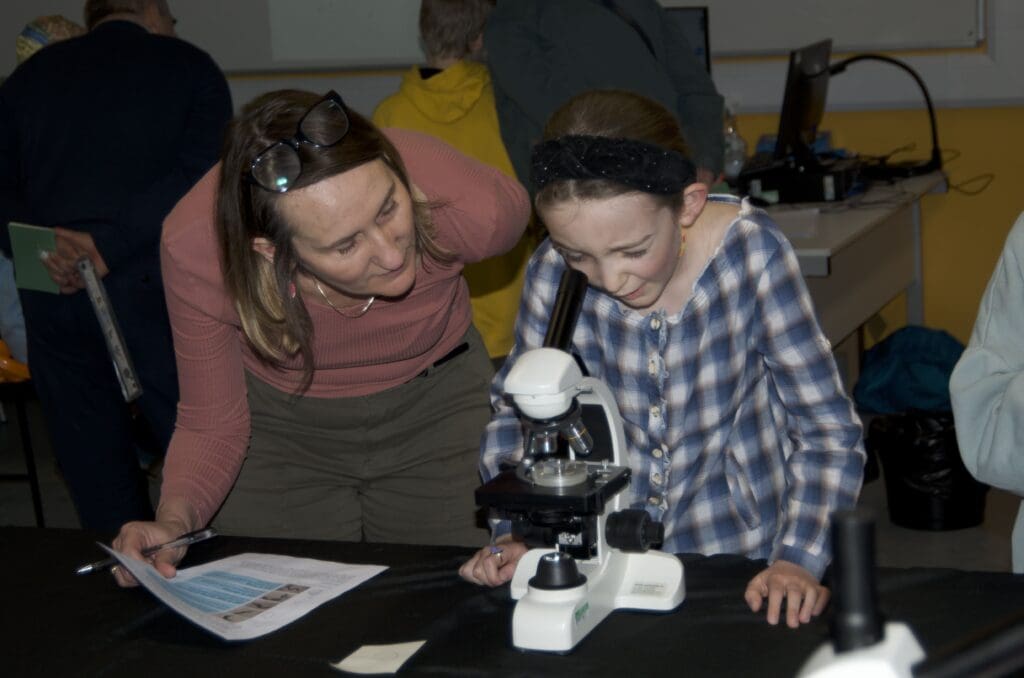
People of all ages learned how scientists unlock the mysteries of life by studying its constituent parts at vastly different scales. They saw how advanced microscopy techniques can be used to study developing tissue, single cells, and even individual molecules.
Participants then played a game that demonstrated what happens to an animal if something goes wrong on the molecular scale. They tested their detective skills by matching mutant microscopic worms to the mutated gene that they contain.
The activity, which was developed by Joe Gehler in the LMB’s Neurobiology Division, was based on the Schafer group’s ‘worms are cleverer than you think’ outreach activity, and was delivered by: Leah Pitman, Veronica Chang, Yonka Christova, Isabel Conze, Mehleen Gehler-Rahman, Miguel Mestre, Megan Gough, Shubham Kumar, Laura Keech and Aditya Pokharna.
Joe Gehler-Rahman commented: “Introducing the public to molecular biology was deeply fulfilling. Instilling scientific interest within the next generation of investigators is amongst the most important and immediate societal benefits that we can provide as scientists- which is to say nothing of how much fun we had.”
What do Brains and Trees have in common?
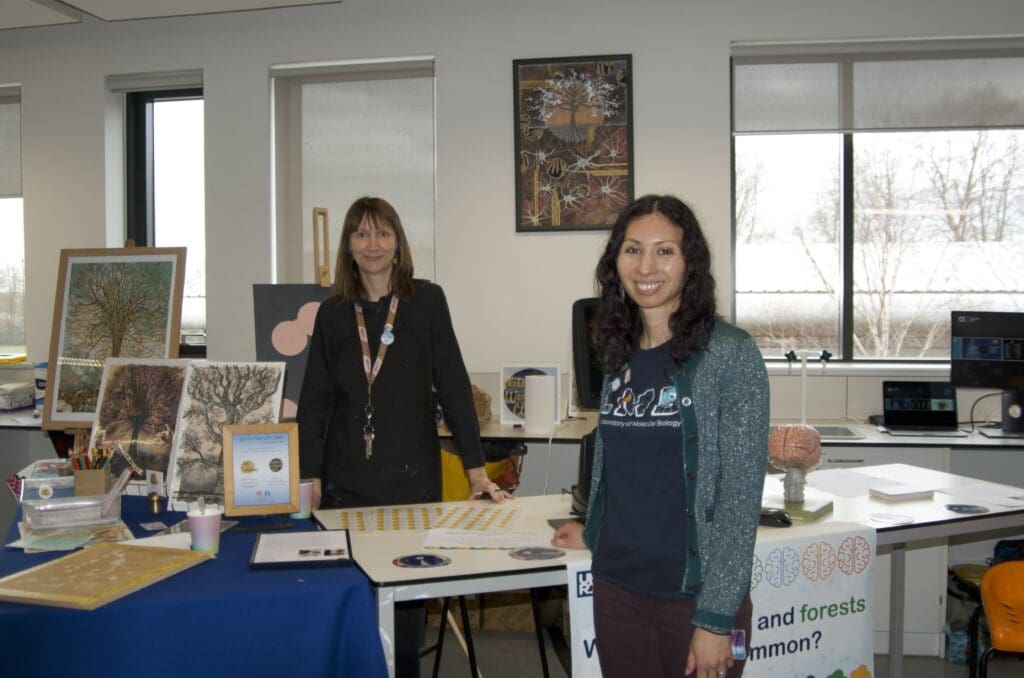
Visitors also attended a science-meets-art exhibit showcasing cells of the circadian clock of the brain. The collaborative exhibit was jointly hosted by Laura Pearson-Clark, local artist, and Nicola Smyllie, scientist from Michael Hastings’ group in the LMB’s Neurobiology Division.
Laura did a “live paint” session and displayed her “Astrocyte Forest”, inspired by astrocytes of the suprachiasmatic nucleus, the body’s master clock. The LMB scientists explained the science behind the circadian clocks and showed samples on a fluorescence microscope.
The activity was delivered by Emily Schierig, Chee Sia and Eve Mehtab. Nicola commented: “It has been incredibly rewarding working with Laura. By combining her artwork with the science behind my research, we were able to spark some fascinating conversations with visitors of all ages.”