
Our group seeks a better understanding of the chemical logic that shapes genetic systems and the fundamental principles that enable heredity and evolution – two of the defining hallmarks of life.
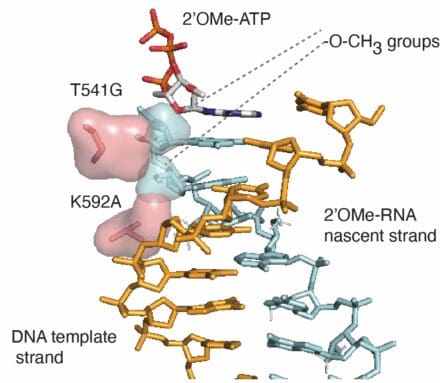
Heredity – the storage and transmission of genetic information – is based on just two types of nucleic acids, DNA and RNA, and the base-pairing interactions of the four canonical bases G, C, A, T (U). We are investigating how the capacity to store and propagate information arose in life’s first genetic system and whether the chemistry of life’s genetic system is based on chance or necessity. Does it reflect evolutionary history – “a frozen accident” – or are DNA and RNA functionally superior to potential alternatives? We seek to define and explore key chemical parameters for molecular heredity by exploring the synthesis, replication and evolution of unnatural synthetic nucleic acids (xeno nucleic acids (XNAs)) comprising altered backbone or expanded base-pairing chemistries. We also seek to exploit the novel, divergent properties of these for applications in biotechnology and medicine.
We are interested in a better understanding of the emergence of informational systems at the origin of life. We use a generative approach, specifically the reconstruction of key components of a likely primordial biology, such as an RNA molecule capable of self-replication and hence evolution, and the definition of the role molecular cofactors, such a simple peptides or lipid membranes, or the environment, such as eutectic ice phases, could have played in its emergence.